Science & TechWildlife
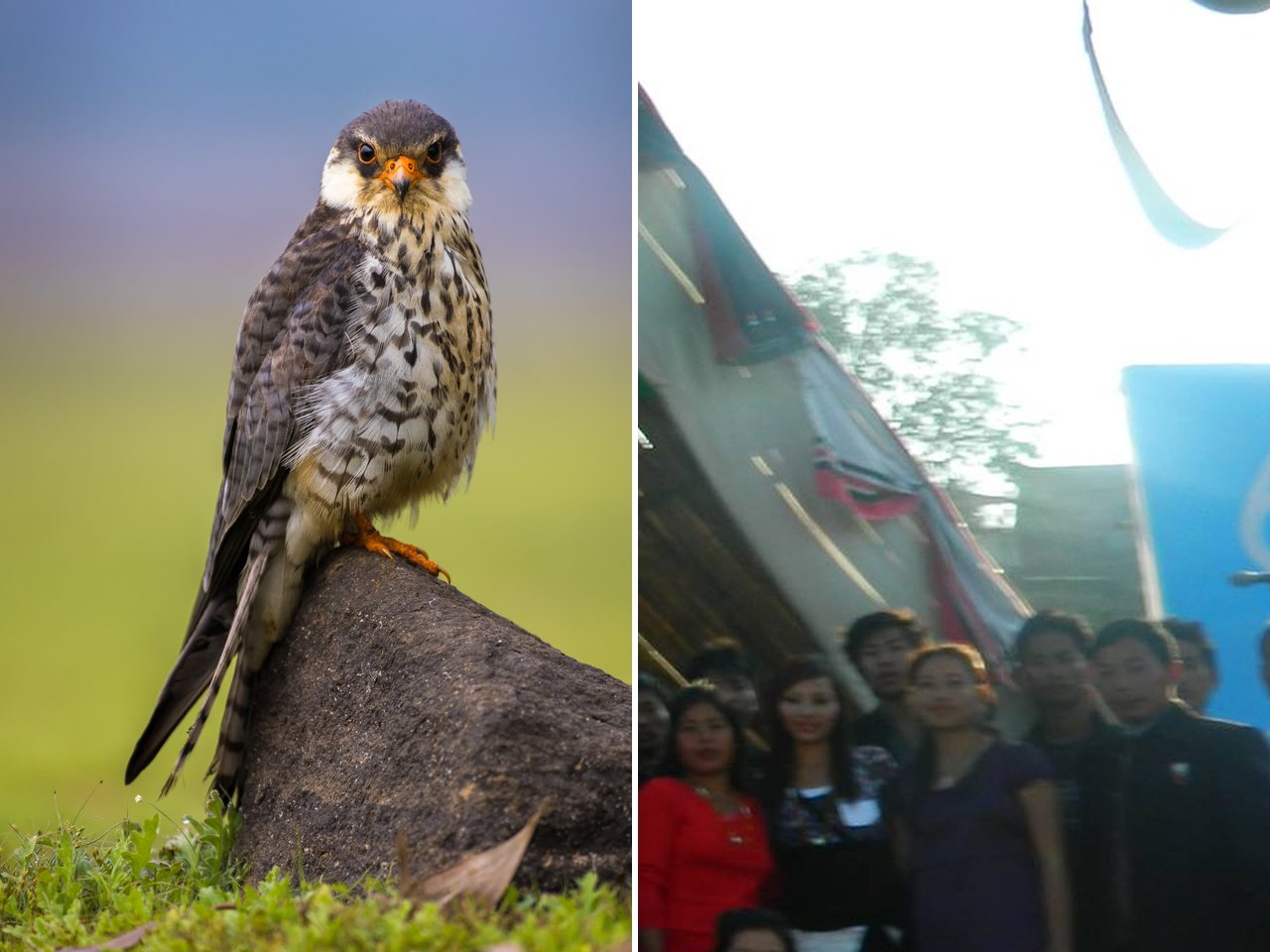
Tagged Amur falcons Apapang and Alang return to Manipur after 23-country journey
The two birds, fitted with satellite tags by Wildlife Institute of India scientists last November, flew in from north-eastern China in 11 days and will soon attempt a non-stop crossing to Somalia.
Key points
- Satellite-tagged Amur falcons Apapang and Alang have reached Manipur after nearly a year of tracking.
- They crossed 23 countries in Asia and Africa and left their breeding grounds in China 11 days before arriving.
- Next comes a six-day non-stop flight of nearly 6,000 km to Somalia, about 3,000 km of it over the Arabian Sea.
Two satellite-tagged Amur falcons, Apapang and Alang, have arrived back in Manipur after a migration that has taken them through 23 countries across Asia and Africa, Union Environment Minister Bhupender Yadav said this week.
Scientists from the Wildlife Institute of India fitted the birds with satellite tags in November 2025 and have tracked them for nearly a year. The two falcons left their breeding grounds in north-eastern China 11 days before reaching Manipur, the minister said in a social media post. Their return closes a full year-long circuit recorded by the tags, from last November’s tagging through 23 countries to this week’s return to Manipur.
They are expected to spend two to three weeks at stopover sites in the hills of Tamenglong district, feeding on termites and building up the fat reserves they will need for the hardest stretch of their journey.
The long jump to Africa
From Manipur, Apapang and Alang are expected to make a six-day non-stop flight of nearly 6,000 km to Somalia. Around 3,000 km of that route lies over the open Arabian Sea, where there is nowhere to land and feed.
Following individual birds such as Apapang and Alang for a full year shows researchers exactly where the falcons stop, how long they stay and which routes they take. Their tags will now show whether both make it across the Arabian Sea.