OpenAI brings GPT-6 to every ChatGPT user, with answers that draw charts and maps
Paying users get GPT-6 Sol and free users a lighter model, Luna. A new 'Intelligent UI' lets ChatGPT reply with diagrams, maps and small working tools instead of only text.
Key points
- GPT-6 reached paid ChatGPT plans on 7 October and Free and Go users on 8 October.
- Intelligent UI lets the chatbot answer with charts, maps, buttons and small tools such as a bill splitter.
- OpenAI's safety report rates both models 'High' capability in cyber and biological risks.
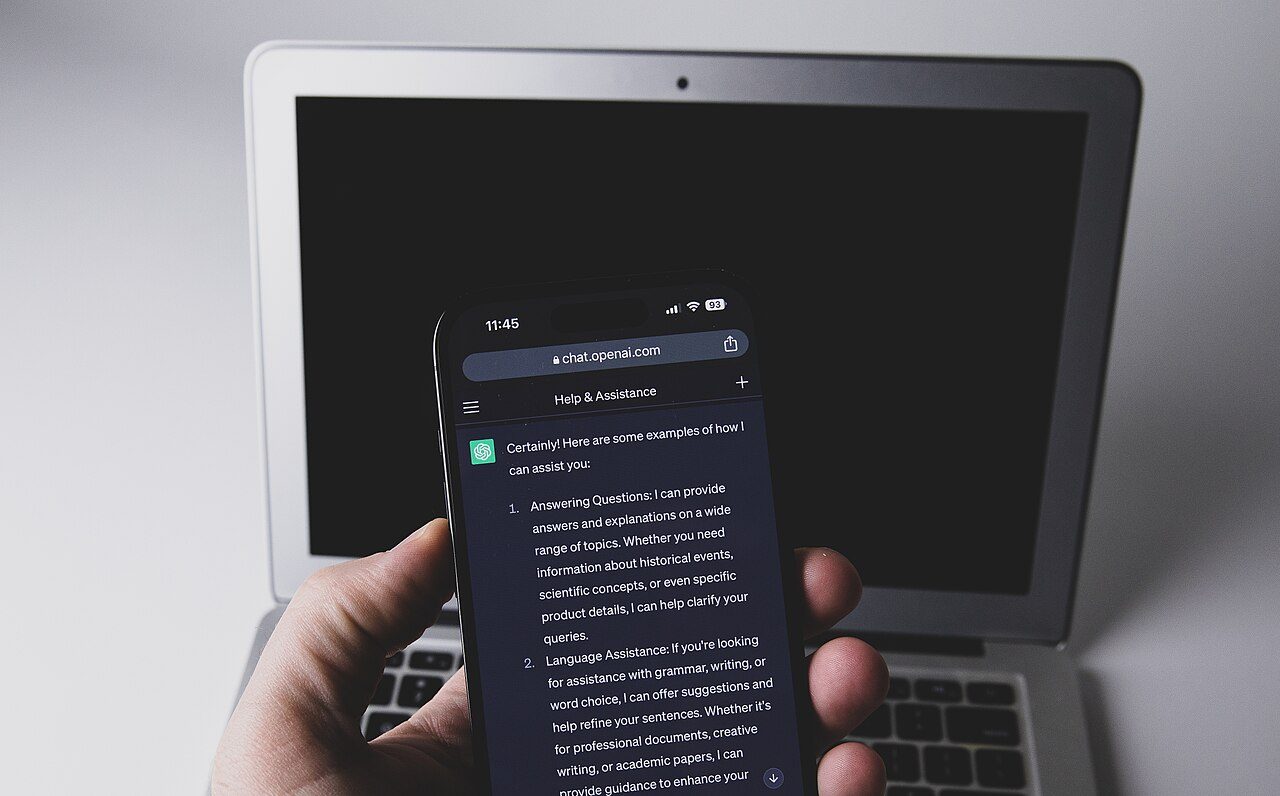
OpenAI has made GPT-6 the default model for everyone who uses ChatGPT, including people who pay nothing. The rollout began on 7 October for paying subscribers and reached Free and Go accounts the next day. It comes with a feature OpenAI calls Intelligent UI, which lets the chatbot answer with charts, maps, buttons and small working tools rather than only paragraphs of text.
Two models, one name
Paying users on the Plus, Pro, Business and Enterprise plans get GPT-6 Sol. Free users, and those on Go, the company’s low-cost plan, get GPT-6 Luna, a lighter version. Both are reasoning models: they are trained to work through a problem in a long internal chain of thought before they reply. They replace the GPT-5.6 models in ChatGPT’s main Chat tab, though users can still switch back to GPT-5.6 Sol. The models behind ChatGPT’s Work and Codex tools are not changing.
Reasoning models tend to keep people waiting. GPT-6 starts answering while it is still thinking, building the reply in stages. For questions that need a web search, OpenAI says GPT-6 Instant begins answering 44% sooner on average than GPT-5.6 Instant.
Answers you can tap
“ChatGPT has predominantly been a text-based interface,” said Aarush Selvan, a product manager at OpenAI. But, he said, “the most helpful answers aren’t just text.”
GPT-6 now chooses how to present an answer. A recipe can come with a cooking timeline and a widget that scales quantities for the number of guests. A road trip appears as stops on a map. A question about savings turns into a calculator you can adjust. Users can also ask for small tools, such as a bill splitter or a simple game. In a demonstration for journalists, Selvan asked how an aeroplane wing generates lift, and ChatGPT drew several diagrams to explain it.
Behind this is a library of ready-made on-screen parts, such as buttons, charts and forms, and a compiler that assembles them as the model writes, so pieces of the interface appear before the full answer is finished. Simple questions still get plain text, and users can cut down the visuals in settings. The feature works on the web and in updated mobile apps; older desktop apps are not yet included. OpenAI concedes that “the model’s design judgment still needs work.”
What the safety report says
OpenAI published a system card, its safety report, alongside the launch. It says both models resist multi-turn jailbreak attempts better than GPT-5.6 Sol did, and that they make up fewer false claims on nearly all of its measures.
Under the company’s Preparedness Framework, both models are treated as “High” capability in cybersecurity and in biological and chemical risks. “Neither one reaches our High threshold in AI Self-Improvement,” the report says. It also records slips on some tests meant for users under 18, including sexual content and emotional reliance. OpenAI says an extra filter that blocks such content for teenagers is not reflected in those scores.
The company also says many of its tests were “deliberately created to be difficult”, and that the scores should not be read as everyday error rates.
The documents
- GPT-6 Sol and GPT-6 Luna: October 2026 update (system card)OpenAI, 7 October 2026
- OpenAI News (GPT-6 and Intelligent UI for everyone, 7 Oct 2026)OpenAI, 7 October 2026