StatesDelhi
Delhi's air stays 'poor' at AQI 223 for a second day as Jahangirpuri slips to 'very poor'
The CPCB's Thursday evening bulletin showed only a small dip from Wednesday's 245, with 29 of the city's monitoring stations in the poor band and GRAP Stage I curbs in force across the NCR.
Key points
- Delhi's 24-hour average AQI was 223 at 4 pm on Thursday, down slightly from 245 a day earlier.
- Jahangirpuri recorded 305, in the very poor band, at 7 pm.
- Manesar was the worst place in Haryana at 271, with Charkhi Dadri and Karnal also in the poor band.
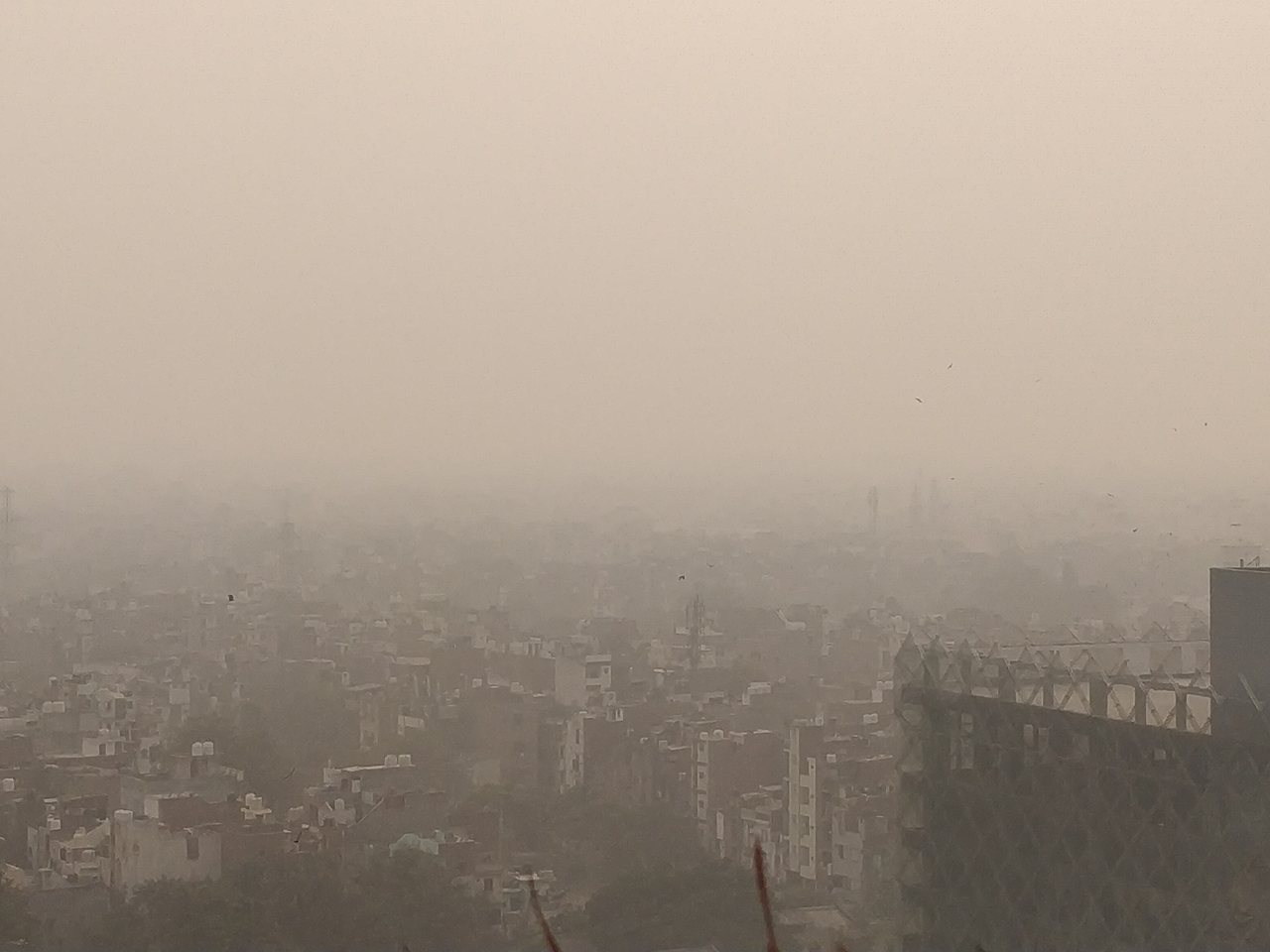
Delhi spent a second straight day in the “poor” air quality band on Thursday, with the Central Pollution Control Board’s 4 pm bulletin putting the city’s 24-hour average air quality index (AQI) at 223. That was a small improvement on Wednesday’s 245, the season’s first poor reading, but not enough to lift the capital out of the band.
PM2.5 and PM10, the fine and coarse dust particles that dominate Delhi’s winter smog, were the main pollutants. Of the 54 monitoring stations in the city, 29 reported poor air on Thursday evening and one, Jahangirpuri in the north, was in the “very poor” band at 305 at 7 pm. The rest were in the moderate range.
A day of hotspots
The day had begun badly. At 7 am the city average stood at 226, and two stations had already crossed 300: Jahangirpuri at 309 and Chandni Chowk at 307. ITO, one of the city’s busiest crossings, read 280, and AIIMS 276. Even India Gate and Akshardham were in the poor band at 238 and 237.
The minimum temperature on Thursday was 19.7°C, 1.7 degrees above the season’s average, and the India Meteorological Department had forecast mainly clear skies. Forecasters at the IMD and the Indian Institute of Tropical Meteorology expect the air to stay poor over the next few days.
The neighbouring towns fared little better. In Haryana, Manesar was the worst of 14 monitored locations at 271, followed by Charkhi Dadri at 246 and Karnal at 242, all in the poor band. The other 11 were moderate.
Curbs in force
Stage I of the Graded Response Action Plan has applied across Delhi and the National Capital Region since Wednesday. It means stricter dust control at building sites and on roads, mechanised sweeping and water sprinkling, a ban on coal and firewood in the tandoors of hotels, restaurants and open eateries, and limits on diesel generators. Schools and offices are not affected. The Delhi Metro added 20 weekday train trips from Thursday.
Tougher rules from the Delhi government’s winter plan are due from 1 November. Vehicles without a valid pollution under control (PUC) certificate are to be refused fuel at designated pumps, and out-of-state vehicles that do not meet BS-VI norms face entry limits, with exemptions. “Please do not come to Delhi without a valid PUC certificate,” Environment Minister Manjinder Singh Sirsa said in a government statement.
The authorities will review pollution levels and the weather before deciding whether the next stage of GRAP restrictions is needed.