WorldPakistan
Pakistan army warns of 'collective response' to any attack on Saudi Arabia
Field Marshal Asim Munir met the new Saudi ambassador as Pakistan's military spokesman said the Makkah defence pact with Riyadh and Ankara means an attack on one will be answered by all three.
Key points
- Asim Munir and Saudi envoy Rajeh Tami Albugamy expressed satisfaction with progress under the Makkah Joint Defence Agreement.
- DG ISPR Ahmed Sharif Chaudhry said an attack on any member, direct or indirect, would bring a "collective" response.
- Pakistan will study any request for military help to Yemen's government, he said.
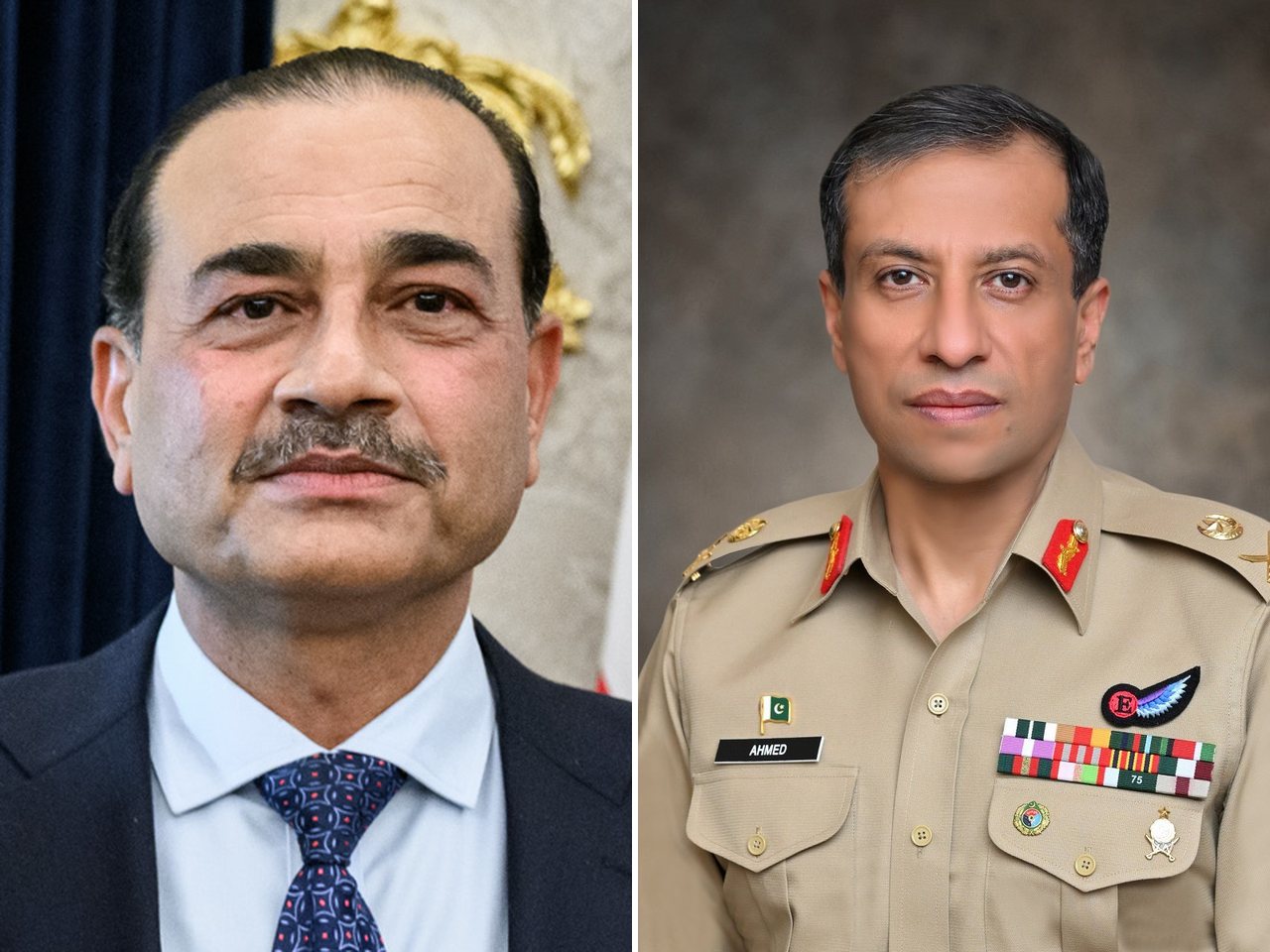
Pakistan’s army chief, Field Marshal Asim Munir, met Saudi Arabia’s new ambassador in Rawalpindi on Monday as his military spokesman warned that any attack on the kingdom, direct or indirect, would draw a joint response from Pakistan, Saudi Arabia and Turkey under their new defence pact.
Munir and Ambassador Rajeh Tami Albugamy “expressed satisfaction” over progress under the Makkah Joint Defence Agreement, the military’s media wing, ISPR, said after their meeting at General Headquarters. They discussed regional security and stressed closer defence cooperation and strategic coordination. Munir congratulated the envoy, who presented his credentials to President Asif Ali Zardari on 14 October, on his appointment.
“The response will be collective”
The message was sharper from Lt Gen Ahmed Sharif Chaudhry, Director General of ISPR. In an interview with the Arabic-language outlet Independent Arabia, he said the alliance was purely defensive and had no offensive intent, but left no doubt about its reach.
“If you directly or indirectly wage this war against any of these three countries, then the response will be collective,” he said. “Saudi Arabia’s sovereignty, territorial integrity, and the security of the two holy mosques are non-negotiable.”
Chaudhry said Pakistan was providing Saudi Arabia with the necessary military support and was prepared to employ all available means. Asked about direct help to Yemen’s government, he said Pakistan would “study any request submitted to it and make the appropriate decision regarding it.”
The remarks come as the Houthis step up missile and drone attacks on Saudi airports and oil sites, and on the same day that a Houthi strike killed 53 recruits at a government camp in southern Yemen. Egypt has also offered Riyadh military support.
A mediator and an ally
The pact, signed on 7 August, treats an armed attack on any of the three signatories as an attack on all. It builds on the Strategic Mutual Defence Agreement that Pakistan and Saudi Arabia signed in September 2025.
Pakistan is trying to hold two roles at once. In Doha on Monday, Interior Minister Mohsin Naqvi told the 8th Global Security Forum that “winning peace was more important than winning a war”, and pointed to the Islamabad talks Pakistan hosted between the US and Iran in April and the memorandum Pakistan and Qatar signed as mediators in June. He also cited the Makkah agreement as an example of regional commitment.
For India, the pact matters because it gives Islamabad a formal military role in the defence of Saudi Arabia, a Gulf state that is home to a large Indian workforce and a major supplier of India’s oil.