PolicyInternal security
BIMSTEC home ministers adopt Delhi Declaration on terror, drugs and trafficking
At the bloc's first meeting of home ministers, chaired by Amit Shah, the seven members approved a convention against human trafficking and plans on drugs, illicit money and disasters.
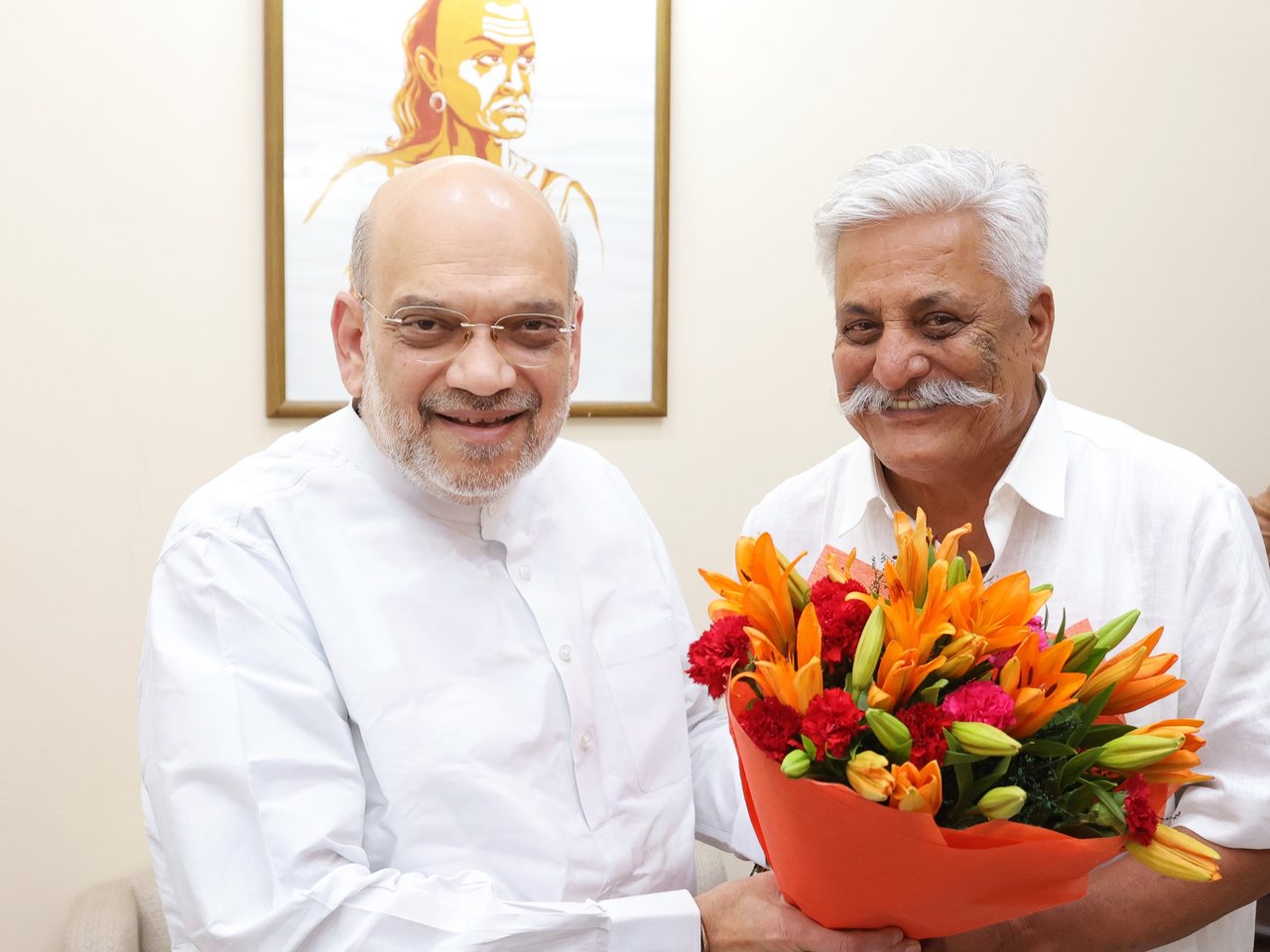
Key points
- Amit Shah chaired the first-ever BIMSTEC Home Ministers' meeting in New Delhi on Tuesday.
- Ministers adopted the Delhi Declaration and a convention against human trafficking.
- Bangladesh's Home Minister Salahuddin Ahmed stayed away; a senior secretary led Dhaka's team.
Home ministers of the Bay of Bengal Initiative for Multi-Sectoral Technical and Economic Cooperation (BIMSTEC) met for the first time on Tuesday in New Delhi, and ended the day with a joint pledge to work together against terrorism, drug smuggling, human trafficking and cybercrime.
Union Home Minister Amit Shah chaired the meeting, which brought together delegations from Bangladesh, Bhutan, India, Myanmar, Nepal, Sri Lanka and Thailand. A senior officials’ meeting led by the Union Home Secretary had prepared the ground on Monday.
What the ministers signed off
The ministers adopted a Delhi Declaration that commits members to cooperate on cross-border terrorism, terror financing, radicalisation, narcotics, human trafficking, cybercrime and organised crime.
Alongside it they approved five documents: a BIMSTEC convention against human trafficking, an action plan on drug control, a memorandum of understanding on building capacity to fight money laundering and the financing of terrorism and weapons proliferation, an action plan to identify and curb illicit financial flows, and a plan for natural disaster preparedness in the Bay of Bengal covering early warning, joint exercises and tsunami risk.
Shah’s pitch
Shah set out five areas for regional cooperation: drug control, counter-terrorism and legal cooperation, the extradition of fugitives, cybersecurity and cybercrime investigation, and building institutional capacity.
He restated India’s policy of zero tolerance for terrorism and said no part of the region should give shelter to terrorist networks that recruit, train or operate against neighbours. Drug trafficking, he told the ministers, is in effect “death trafficking”, and the whole region has to act on it together.
Shah also pointed to India’s record as a first responder in regional disasters and said a BIMSTEC Disaster Management Centre is planned in Jamnagar, Gujarat. India offered to share its expertise in police training, counter-terror operations and forensics with the other members.
How the meeting came about
BIMSTEC leaders decided at their fourth summit in 2018 to set up a home ministers’ track. At the sixth summit in Bangkok on 4 April 2025, Prime Minister Narendra Modi backed the idea and offered to host the first meeting.
An empty chair from Dhaka
Bangladesh’s Home Minister Salahuddin Ahmed did not travel to Delhi. A four-member delegation led by Home Affairs Senior Secretary Monzur Morshed Chowdhury represented Dhaka, with AKM Shahidul Karim, the Foreign Ministry’s additional secretary for SAARC and BIMSTEC, and Home Ministry joint secretary Rebecca Khan.
Dhaka has not given an official reason. The absence follows Prime Minister Tarique Rahman’s decision to skip a BRICS outreach session in New Delhi in September, to which India had invited him as BIMSTEC chair.
The new instruments now go to member governments to put into practice. They are the first texts to come out of the home ministers’ track, eight years after the bloc’s leaders first called for it.
The documents
- India hosts first BIMSTEC Home Ministers' meeting in New Delhi chaired by Union Home Minister Amit Shah (Hindi release)PIB, Ministry of Home Affairs, 13 October 2026