PolicyCourts
CJI Surya Kant opens High Court bench in Leh, promises Ladakh cases a single day in the Supreme Court
Lawyers in Leh and Kargil will be able to argue before the Supreme Court by video link, the Chief Justice said, as the region got a high court bench of its own after close to a century.
Key points
- Chief Justice Surya Kant inaugurated the Ladakh Bench of the High Court of Jammu and Kashmir and Ladakh in Leh on Sunday.
- All Supreme Court matters from Ladakh will be listed on a single day and heard by video link.
- The bench's first sittings, from 21 to 23 October, already have 105 cases listed.
For close to a century, people in Ladakh with a case before the high court had to cross the Great Himalayas to be heard. On Sunday, Chief Justice of India Surya Kant brought the court to them.
Inaugurating the Ladakh Bench of the High Court of Jammu and Kashmir and Ladakh at Melongthang in Leh, the Chief Justice said the region’s link to the country’s top court would soon be shortened too. Once video-conferencing is set up at the new bench, lawyers from Leh and Kargil will be able to argue before the Supreme Court without leaving Ladakh, and all matters from the region will be listed on a single day and heard day to day.
“In this way, the distance will no longer stand between people of Ladakh and the highest Court of our country,” he said.
‘Not merely arrived, but taken root’
Justice Kant said that when Ladakh became a Union Territory in 2019, adding its name to the high court’s title had been an important step but a largely symbolic one. “A name on a court’s letterhead is not the same as a court at one’s doorstep,” he said.
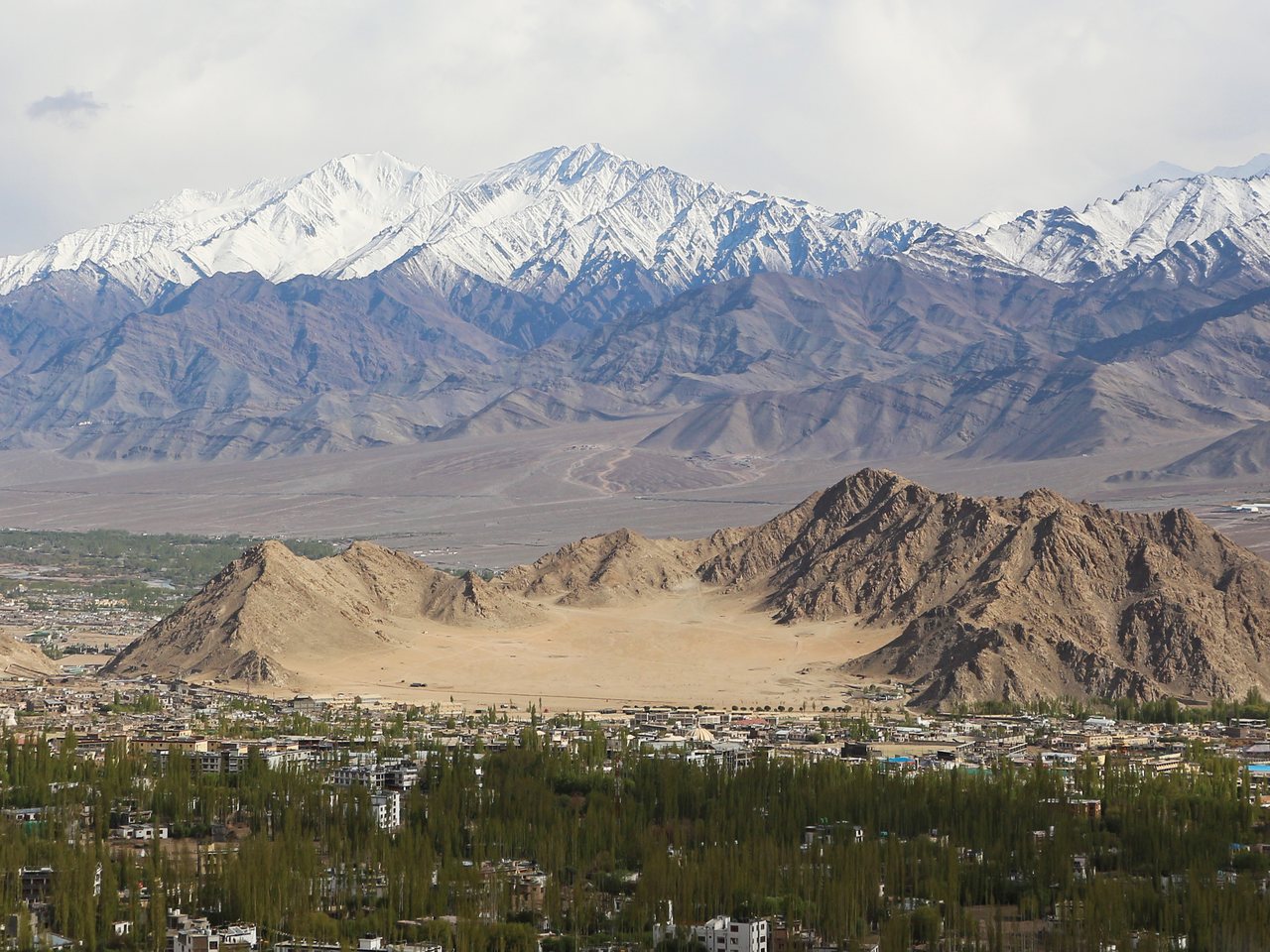
“For close to a century, the high court that served Ladakh sat beyond the Great Himalayas, reachable in winter only by air,” he said, recalling that a Special Court had been set up in Leh as long ago as 1870. The bench, at about 3,500 metres, sits higher than any high court in India has before, he said he had been told.
He stressed that it belonged equally to Leh and Kargil, the Union Territory’s two districts, and would serve its purpose only when people across Ladakh felt it was theirs. “Access to justice, after all, begins not in the court’s compound, but at the litigant’s door,” he said. “In a land of such vast distances, technology can do what no road ever could.”
The Chief Justice named technology and legal aid as the two tools for closing the gap, calling for legal awareness camps, para-legal volunteers, affordable lawyers, lok adalats and timely compensation for victims of crime. He also spoke of the part village institutions and customary practice play in settling disputes in the region. “When that day comes, we will know that this bench has not merely arrived in Ladakh, but taken root here,” he said.
Who was there
Supreme Court judges M M Sundresh, P S Narasimha and Arun Palli and Attorney General R Venkataramani attended, along with the high court’s Chief Justice Pushpendra Singh Bhati and Justices Sanjeev Kumar, Sindhu Sharma and Rajnesh Oswal. Lieutenant Governor Vinai Kumar Saxena called the bench “a historic milestone in strengthening access to justice in the region”.
The bench is designed as a paperless court, with an e-filing portal, a document management system, a digitisation centre and a video-conferencing room. The Chief Justice also launched an online recruitment portal for the high court and work on solar power at 11 locations.
First cases this week
The bench will sit for the first time from Wednesday, 21 October, to Friday, 23 October, under a high court notice issued on 14 October, with 105 cases already on its list. Until now, litigants from Ladakh have had to travel to Srinagar or Jammu.