PoliticsRSS
Bhagwat says protests must respect the Constitution as RSS closes its centenary year
At the Vijayadashami rally in Nagpur, with Jagdeep Dhankhar among the guests, the RSS chief said regime change "has neither happened nor will it happen".
Key points
- Mohan Bhagwat told the Reshimbagh rally that regime change "has neither happened nor will it happen".
- Former Vice-President Jagdeep Dhankhar attended as an invited guest; Dainik Jagran editor Sanjay Gupta was chief guest.
- Prime Minister Narendra Modi called it "a very motivating address".
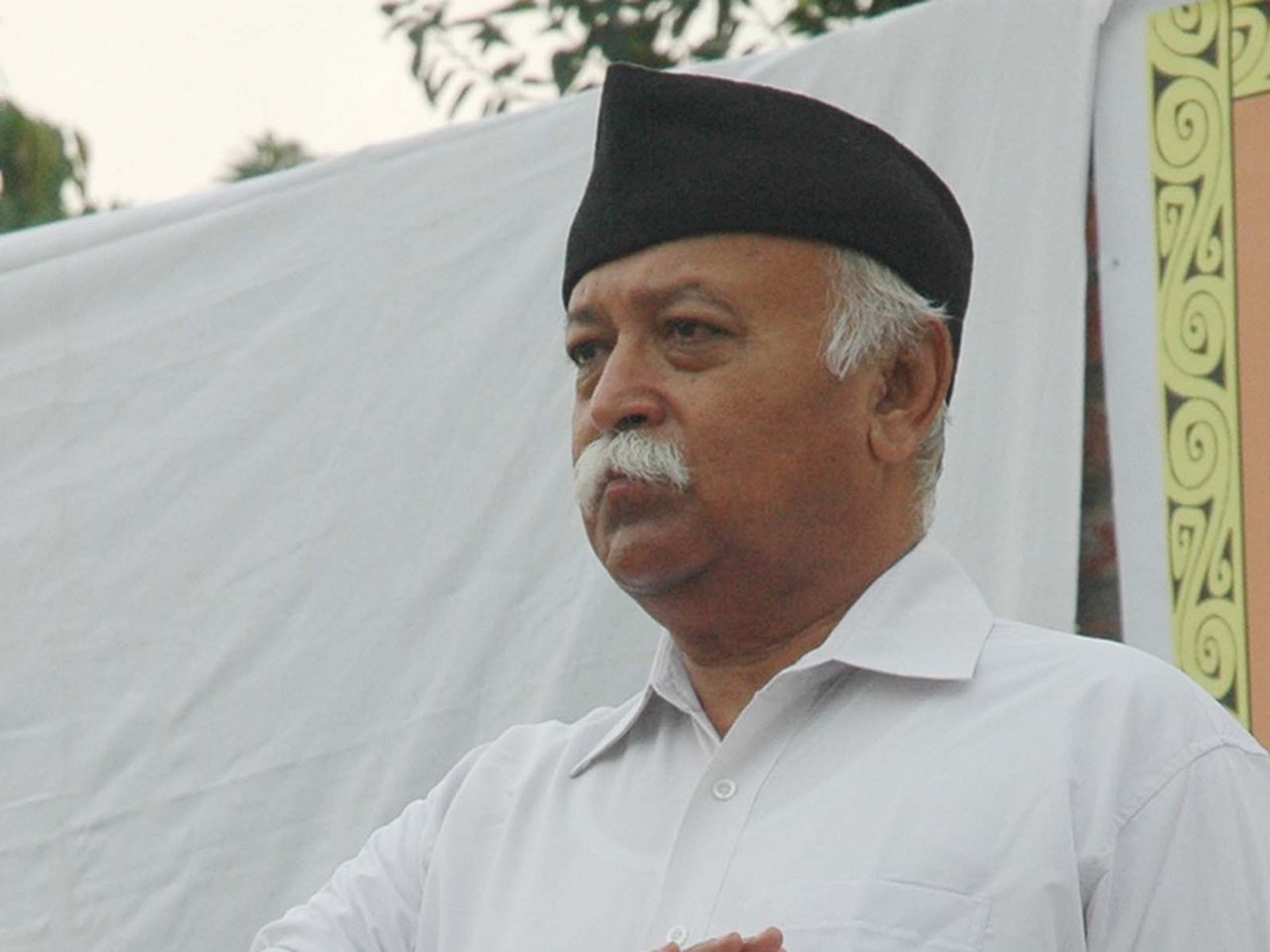
RSS chief Mohan Bhagwat used the Sangh’s centenary Vijayadashami address in Nagpur on Tuesday to tell protesters, governments and politicians alike to stay within the Constitution, and said of the regime change talk around recent unrest abroad that it “has neither happened nor will it happen”.
The annual rally at Reshimbagh ground closed the RSS’s hundredth year. The organisation was founded in Nagpur by Keshav Baliram Hedgewar on Vijayadashami in 1925. Former Vice-President Jagdeep Dhankhar sat among the invited guests, an invitation that had drawn a jibe from the Congress last week. Dainik Jagran editor-in-chief Sanjay Gupta was the chief guest. Maharashtra Chief Minister Devendra Fadnavis, Union minister Nitin Gadkari and state revenue minister Chandrashekhar Bawankule were in the audience, along with the Consul General of Israel in Mumbai.
Protests and their limits
Bhagwat spoke against the backdrop of a fierce row at home over “regime change”, set off by the opposition’s street campaign against the Special Intensive Revision of electoral rolls and Chief Election Commissioner Gyanesh Kumar. He referred to the protests in France and events in Albania, Nepal and Bangladesh.
He said protests against social problems and failings of the system were natural. But protesters, administrators and political leaders all had to respect the Constitution, the law and civil public debate, he said. Movements alone could not solve problems, and an agitation that carried a different purpose underneath turned political and could be exploited by forces hostile to the country.
“Social participation and mutual dialogue must increase. We also have a responsibility to run society and the country,” he said.
Svabodh and the Preamble
Much of the address dwelt on “svabodh”, or self-awareness, which Bhagwat linked to the opening words of the Constitution’s Preamble, “We, the people of India”. The work the Sangh had done for 100 years was “precisely aimed at awakening this self-awareness”, he said, and on that basis it “strives to make India united and strong”. He named self-awareness and swadeshi as parts of the RSS’s “Panch Parivartan” programme of social change.
“India is a land of diversity; our traditional character has been to accept and protect this diversity,” he said.
He marked the 650th birth anniversary of Sant Ravidas, and paid tribute to the Arya Samaj leader Swami Shraddhanand, who died 100 years ago, and to Swami Lakshmanananda Saraswati, who he said “dedicated his life to serving our tribal brothers in Odisha”.
Looking outwards, Bhagwat said the world was paying more attention to India as geopolitical tension, economic uncertainty and environmental damage grew. “The world knows that India has the answers to these,” he said.
Reactions
Prime Minister Narendra Modi, who earlier greeted swayamsevaks on the RSS’s foundation day, called it “a very motivating address” and singled out its “emphasis on the commitment to Seva and nation building”.
Keralam BJP president Rajeev Chandrasekhar said Bhagwat’s “vision and experience should serve as a guiding light to all Indians”. He said hostile forces would use friends inside India to slow the country down, and called Shiv Sena (UBT) MP Sanjay Raut, who had said India should learn from Albania, a “provocateur”.
Dhankhar, who resigned as Vice-President in July 2025, made no public remarks at the event.