Science & TechSpace
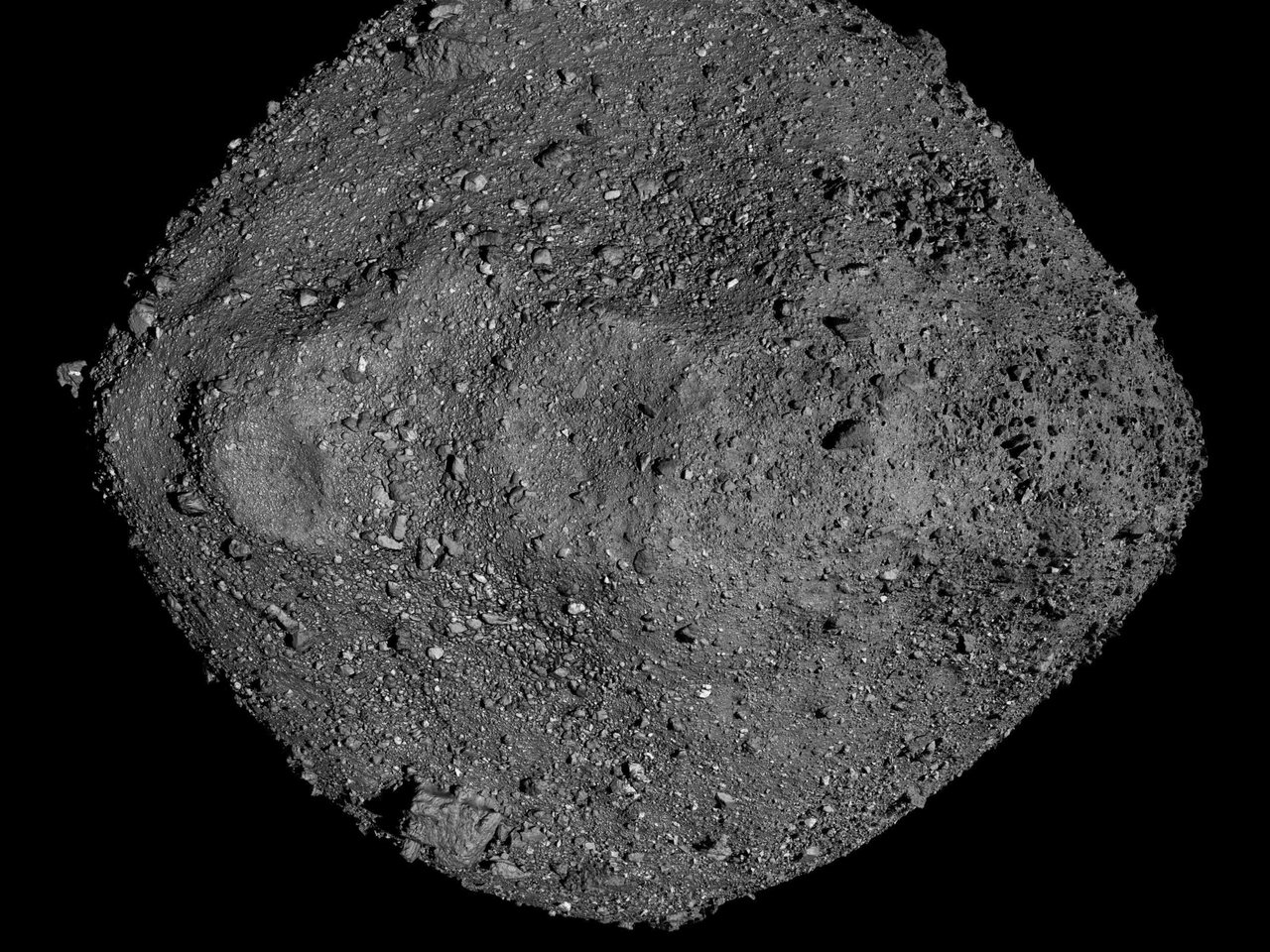
Bennu dust is a hybrid of inner and outer Solar System material, study finds
ETH Zurich scientists studying half a gram of the asteroid brought back by NASA's OSIRIS-REx say it may be the closest sample yet of the Solar System's original chemical mix.
Key points
- Isotopes of iron, titanium and chromium show Bennu's material matches neither the inner nor the outer Solar System cleanly.
- Bennu, the asteroid Ryugu and CI meteorites share a fingerprint suggesting a common reservoir of ancient dust.
- The team worked with half a gram of the roughly 120 grams that landed in Utah in 2023.
Dust from the asteroid Bennu, collected by NASA and brought to Earth three years ago, is a blend of material from the inner and outer Solar System, scientists at ETH Zurich have found.
“Bennu is a hybrid: the material does not clearly match either the inner or the outer Solar System,” said Maria Schönbächler, professor of isotope geochemistry at ETH Zurich and first author of the study, published in the journal Science Advances.
Her team measured isotopes of iron, titanium and chromium, which act as chemical fingerprints of where in the young Solar System a body’s raw material came from. Iron and titanium turned out to be spread evenly through Bennu’s material.
The fingerprint closely matches that of Ryugu, the asteroid sampled by Japan’s Hayabusa2 mission, and of the CI meteorites. The researchers say this points to a shared origin in the same reservoir of ancient cosmic dust.
Where the mixing happened
The authors propose that these bodies formed near the water-ice line, the boundary in the early Solar System beyond which water froze, where material from the inner and outer regions met.
They suggest Jupiter played a part. The giant planet began forming within about a million years of the Sun’s birth, and its growing gravity may have held back larger particles while letting fine dust mix freely. That could explain why Bennu’s chemistry resembles the Sun’s.
“Bennu may offer our best glimpse of the original mix of chemical elements,” Schönbächler said.
The ETH Zurich laboratory received half a gram of the roughly 120 grams of Bennu that landed in the Utah desert on 23 September 2023. Bennu circles the Sun every 1.2 years and passes within about 300,000 km of Earth roughly every six years.
The team now wants to know whether other asteroids carry the same signature. “We are now wondering whether other asteroids have the same isotopic signature as Bennu and Ryugu,” Schönbächler said.