Science & TechPhysics
Physics Nobel for Francis Halzen, who turned South Pole ice into a neutrino telescope
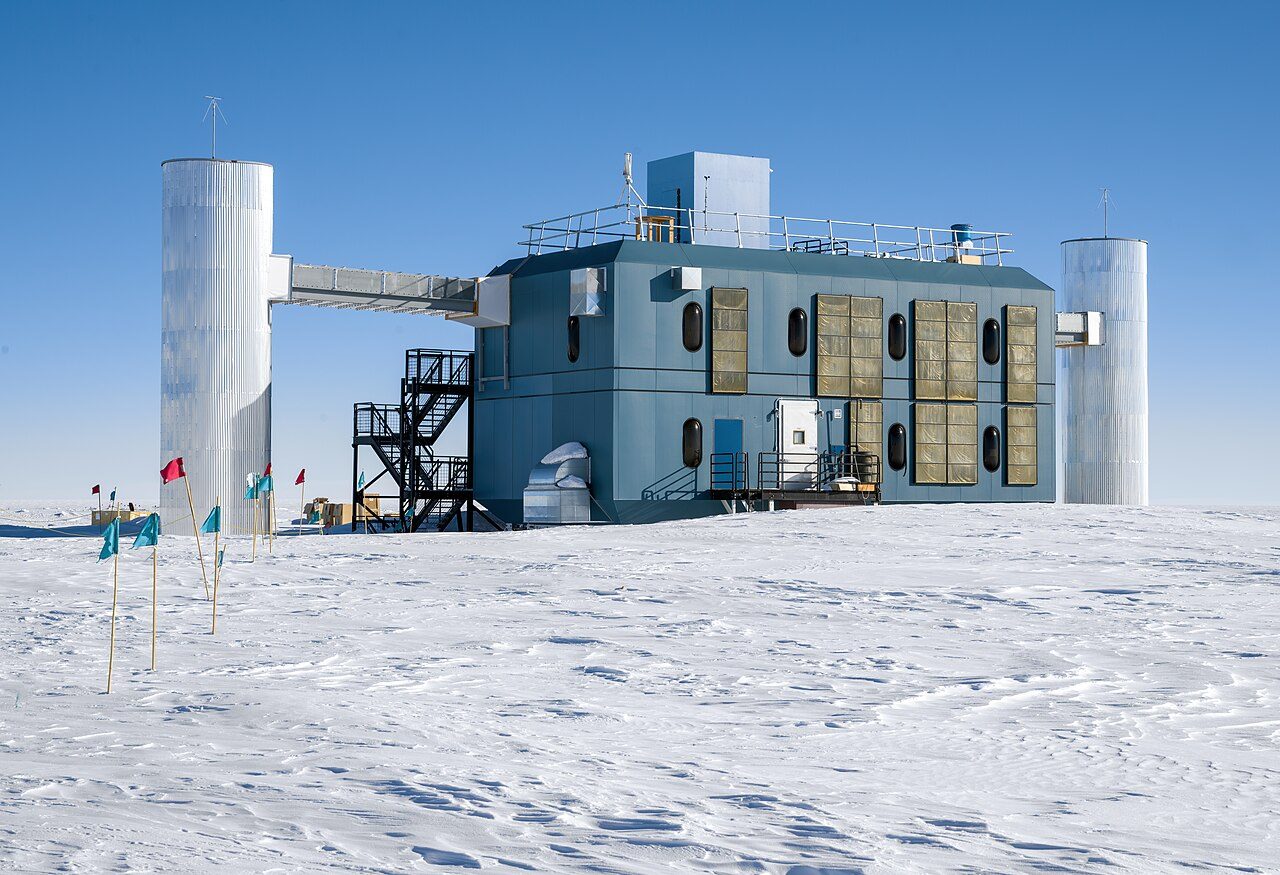
The IceCube observatory, buried in a cubic kilometre of Antarctic ice, caught the first high-energy neutrinos from beyond the solar system and traced some of them to distant galaxies.
Key points
- Francis Halzen, 82, of the University of Wisconsin–Madison is the first sole winner of the physics prize since 1992.
- IceCube uses 5,160 light sensors in the ice to catch rare flashes from neutrinos hitting atoms.
- It has traced high-energy neutrinos to two distant galaxies and the Milky Way.
Francis Halzen, a Belgian-born physicist who spent decades turning a block of Antarctic ice into a telescope, has won the 2026 Nobel Prize in Physics. The Royal Swedish Academy of Sciences announced on 6 October that Halzen, 82, of the University of Wisconsin–Madison, is honoured “for decisive contributions to the IceCube Neutrino Observatory and the discovery of high-energy neutrinos of astrophysical origin”.
He is the first person to win the physics prize alone since Georges Charpak in 1992. “It was a great surprise, and I obviously didn’t expect it,” Halzen said, speaking to the committee by phone from Italy.
Catching ghost particles
Neutrinos are everywhere and almost impossible to catch. They have no electric charge and very little mass, so they pass through matter almost untouched. Trillions of them, many produced by the Sun, go through every human body each second.
That shyness is also what makes them useful. “The neutrino has such peculiar properties, the fact it interacts so infrequently in material,” said Mark Pearce, who chairs the Nobel physics committee. Because so little stops them, neutrinos carry information from distant cosmic sources that cannot be obtained any other way.
To catch something that rarely hits anything, you need an enormous target. Halzen and a colleague had the idea in 1988 of using the ice under the South Pole. Scientists melted nearly 100 holes in the ice and lowered strings of light sensors into them before the water refroze. Finished in late 2010, IceCube holds 5,160 sensors on 86 strings, spread through about a cubic kilometre of ice deep below the surface.
When a neutrino does strike the nucleus of an atom in the ice, it produces charged particles that give off a faint blue flash called Cherenkov light. The sensors record the flash, and its pattern shows which direction the neutrino came from. Nobel committee member Eva Olsson said Halzen “realized that the ice at the South Pole could visualize these neutrino messengers”.
What the ice has seen
In 2013, two years after full operations began, IceCube reported 28 neutrinos, each with an energy of at least 30 teraelectronvolts. They were the first high-energy neutrinos detected from beyond the solar system. Since then the team has traced some of them to their sources: a blazar, a galaxy powered by a supermassive black hole at its centre, about 4 billion light-years away; the active galaxy NGC 1068; and our own Milky Way.
IceCube, from idea to Nobel
- 1988Halzen and a colleague propose using South Pole ice to detect neutrinos.
- Dec 2010IceCube completed: 5,160 sensors on 86 strings.
- 2013First high-energy neutrinos from beyond the solar system: 28 events.
- 2018A neutrino caught in September 2017 is linked to the blazar TXS 0506+056.
- 2022Galaxy NGC 1068, 47 million light-years away, identified as a source.
- 2023The Milky Way shown to emit high-energy neutrinos.
- 6 Oct 2026Halzen wins the Nobel Prize in Physics.
“This experiment in the Antarctic is a revolutionary way of understanding the universe that we didn’t have before,” said Michael Moloney, chief executive of the American Institute of Physics.
A shared prize in spirit
IceCube cost about $279 million. It is run by the University of Wisconsin–Madison with funding from the US National Science Foundation, and its collaboration has about 450 scientists from 58 institutions in 14 countries. Halzen has been its principal investigator since 2001.
It’s a great relief for me to finally deliver the recognition that this great collaboration deserves.
What comes next
Earlier this year the team added more than 600 new sensors in five fresh holes near the centre of the detector, and the first science data from that upgrade is expected later in 2026. Scientists have also proposed IceCube-Gen2, with an optical array eight times the size. Halzen joked to the audience that he was “working on a proposal” and hoped the prize would help get it approved.
The prize is worth 12 million Swedish kronor and will be presented in Stockholm on 10 December.
The documents
- AIP Congratulates 2026 Nobel Prize Winner in PhysicsAmerican Institute of Physics, 6 October 2026
- University of Wisconsin–Madison Professor Francis Halzen named 2026 Nobel laureate in physicsUniversity of Wisconsin–Madison, 6 October 2026
- Francis Halzen, IceCube principal investigator, wins 2026 Physics Nobel PrizeIceCube Neutrino Observatory, 6 October 2026
- APOD: Ice Fishing for Cosmic NeutrinosNASA, 11 October 2026