Science & TechSpace
SpaceX Dragon lifts off with lab-grown brain models and the station's last solar arrays
The CRS-35 cargo capsule launched from Florida on Tuesday afternoon India time and is due to reach the International Space Station on Thursday evening with 2,860 kg of supplies and science.
Key points
- Falcon 9 lifted off at 4:03 pm IST on Tuesday and the booster landed back beside the pad.
- Dragon is due at the station at about 8:30 pm IST on Thursday.
- On board are the final pair of roll-out solar arrays and more than 40 science studies.
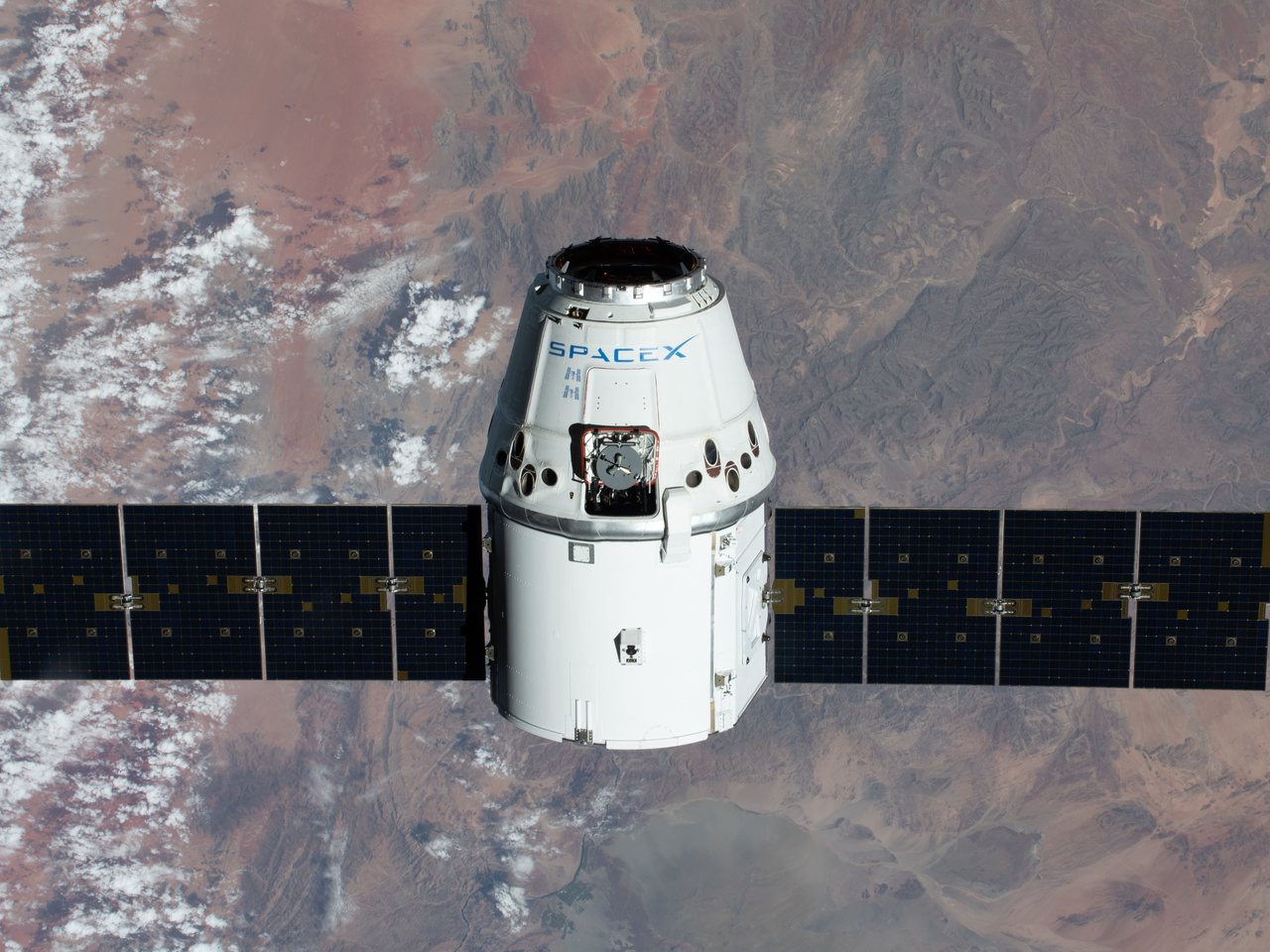
A SpaceX Dragon cargo capsule is on its way to the International Space Station after lifting off from Florida on Tuesday, carrying 2,860 kg of supplies and science, including lab-grown models of the human brain and the station’s last set of new solar panels.
The Falcon 9 rocket launched the CRS-35 mission from Space Launch Complex 40 at Cape Canaveral Space Force Station at 6:33 am local time, 4:03 pm IST. The first-stage booster, on its eighth flight, landed back at Landing Zone 40 beside the pad less than eight minutes later. Dragon separated from the upper stage and began a two-day chase to the station.
It is the 35th SpaceX cargo flight under NASA’s Commercial Resupply Services contract. The capsule is due to arrive at about 11 am EDT on Thursday, 8:30 pm IST, and dock on its own with the space-facing port of the Harmony module. NASA astronaut Anil Menon and Canadian Space Agency astronaut Joshua Kutryk will monitor its approach.
What is on board
The biggest items are two Roll-Out Solar Array wings built by Redwire Space, the fourth and final pair bound for the station. Each can supply more than 20 kilowatts, and NASA plans to fit them during a series of spacewalks.
Dragon also carries equipment for more than 40 studies. One flies small, lab-grown models of the human brain for five weeks and will compare them with identical models kept on Earth, to see how a short spell in space affects brain tissue at the level of cells. Another tests whether crop diseases spread faster in weightlessness, using plants infected with a fungus.
A compact microplate reader will be tried out to see whether astronauts can measure antibodies and proteins in their own samples on board. A long-running study of antibiotic-resistant bacteria, known as GEARS, returns for its fourth and final planned stay, with crew members swabbing surfaces to track how superbugs survive and change.
The capsule also brings hardware to make artificial retinas in orbit, 3D heart tissue for drug testing, and samples to study how a new type of glass forms. “New types of glass like these could advance optics and electronics on Earth,” said Liz Warren, NASA’s deputy chief scientist in the station programme office.
Waiting on board
The station’s seven-member Expedition 75 crew spent launch day on routine science. Menon and Kutryk cleaned a science freezer in Japan’s Kibo module, and Menon ran eye checks on crewmates Jessica Watkins and Luke Delaney with a medical imaging device. Commander Pyotr Dubrov and cosmonaut Anna Kikina tested an exoskeleton suit for controlling robots remotely.
Dragon will stay about a month before splashing down in the Pacific off California with finished experiments. It is the only cargo craft now flying that can bring material back to Earth.
Updated 14 October 2026, 8:50 am IST: This story was updated after it was first published.
The documents
- SpaceX Dragon Lifts Off for Thursday Cargo DeliveryNASA, 13 October 2026
- Dragon Launches New Cargo as Crew Works Biomedicine, Advanced Space TechNASA, 13 October 2026
- NASA's SpaceX CRS-35 Mission to Launch Health ResearchNASA, 12 October 2026