StatesAndhra Pradesh
Andhra HC strikes down 34% BC quota in local bodies; Supreme Court dismisses appeal
The court said total reservation could not cross 50% without proper data and ordered polls within six weeks. Chief Minister Naidu now promises 34% of NDA tickets to BC candidates instead.
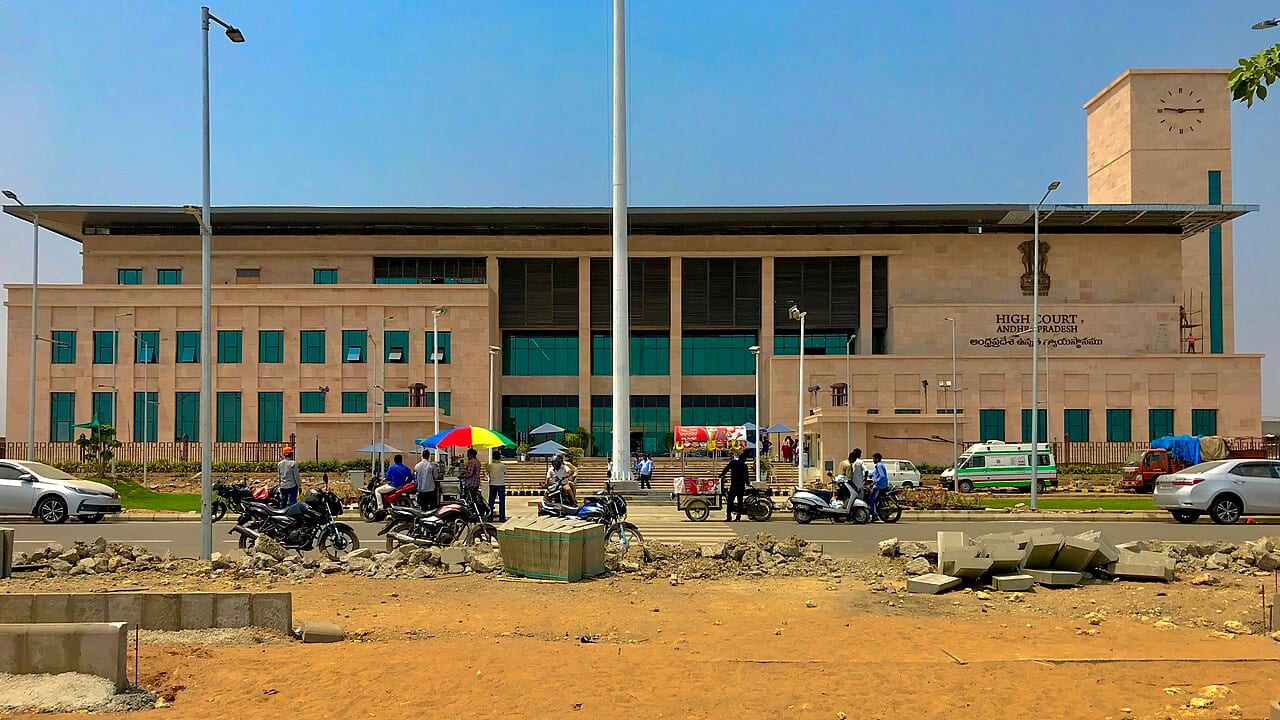
Key points
- On 1 October the Andhra Pradesh High Court quashed two orders giving Backward Classes 34% of rural and 33.33% of urban local body seats.
- The bench held the quotas pushed total reservation past the 50% ceiling without empirical data, and ordered the poll process to begin within six weeks.
- The Supreme Court dismissed the state's appeal on 9 October, calling the High Court's approach very reasonable.
- Chief Minister N. Chandrababu Naidu said the NDA would allocate 34% of its local poll seats to BC candidates.
The Andhra Pradesh High Court on 1 October struck down the state’s new reservation for Backward Classes (BCs) in local body elections, holding that it pushed total reservation beyond the 50% ceiling set by the Supreme Court. Eight days later, the Supreme Court refused to interfere.
A division bench of Chief Justice Lisa Gill and Justice Challa Gunaranjan quashed two government orders: G.O.Ms.No.105 of the Panchayat Raj Department, giving BCs 34% of seats in rural local bodies, and G.O.Ms.No.1065 of the Municipal Administration Department, giving them 33.33% in urban local bodies, The South First reported. Chief Minister N. Chandrababu Naidu had announced the quotas on 18 August, PTI reported.
What the High Court said
The bench held that the state could provide BC reservation within the 50% limit after collecting empirical data, following the Supreme Court’s rulings in Vikas Kishanrao Gawali and Janhit Abhiyan, Deccan Chronicle reported. It found that data from the state’s Unified Family Survey could not justify reservation above 50%, because the government lacked scientifically generated data for that purpose.
The state had relied on that survey, which put the BC population at about 50.42%, and on a study by a commission headed by retired IAS officer Rajiv Ranjan Mishra, The South First reported. The court said it was not examining the legality of the commission’s constitution, since its formation had not been challenged, Deccan Chronicle reported.
The court directed the government and the State Election Commission to start the election process within six weeks. The terms of gram panchayats, municipalities and municipal corporations ended in March and April. It held that the Election Commission of India’s Special Intensive Revision of electoral rolls was no bar to the polls.
It dismissed other petitions, including a PIL by AP BC Welfare Union president Kesana Sankara Rao seeking to defer polls until a BC census, Deccan Chronicle reported, and a YSR Congress Party petition seeking polls only after the revision of rolls, according to The South First.
The quota and the ceiling
- 34%BC quota in rural local bodies, struck down
- 33.33%BC quota in urban local bodies, struck down
- 50%ceiling on total reservation the court applied
- 6 weeksdeadline to start the local body election process
Supreme Court dismisses the appeal
The state filed a special leave petition on 3 October, The South First reported. On 9 October a bench of Justices Dipankar Datta and Sheel Nagu dismissed it, PTI reported, saying the High Court had “passed a reasonable order”.
“Under what law is this being made?” Justice Datta asked during the hearing, before saying “Dismissed”, according to The South First. He described the High Court’s ruling as a “very reasonable approach by the High Court”.
This is not the first such ruling in the state. On 2 March 2020 the High Court set aside G.O.Ms.No.176, under which total local body reservation had reached 59.85%, The South First noted.
Government and party responses
Before the hearing, Union Minister Ram Mohan Naidu said the state had placed adequate data before the court to justify going past 50%, and that the quota would have secured about 16,800 local posts for BC candidates, The South First reported.
After the dismissal, Chief Minister Naidu said the NDA would give BC candidates 34% of its seats in the local body polls. “Nevertheless, the NDA alliance will allocate 34 per cent of the seats to them,” he said at Narsingolu in Prakasam district on 9 October, according to IANS. He added: “We implemented numerous changes to uplift them politically, economically, and socially.” He accused the YSR Congress Party of going to court to block the earlier increase.
BC organisations want a different fix. R. Krishnaiah, Rajya Sabha member and president of the National BC Welfare Association, speaking for 14 BC groups, urged the state to press the Centre for a constitutional amendment, Deccan Chronicle reported. He questioned the basis of the 50% limit, noting that SC and ST reservation together reaches 70% to 90% in some northeastern states.