StatesDelhi
Delhi's air holds in moderate band at 191, the cleanest 24 October in a decade
The CPCB's 4 pm bulletin ended a three-day run of poor air. Environment Minister Manjinder Singh Sirsa credited enforcement, but said the fight was far from over.
Key points
- Delhi's 24-hour average AQI was 191 at 4 pm on Saturday, down from 230 on Friday.
- The government says it is the lowest reading for 24 October in ten years, leaving out the Covid period.
- Parts of north Delhi stayed poor, with Jahangirpuri at 284 and Narela at 282.
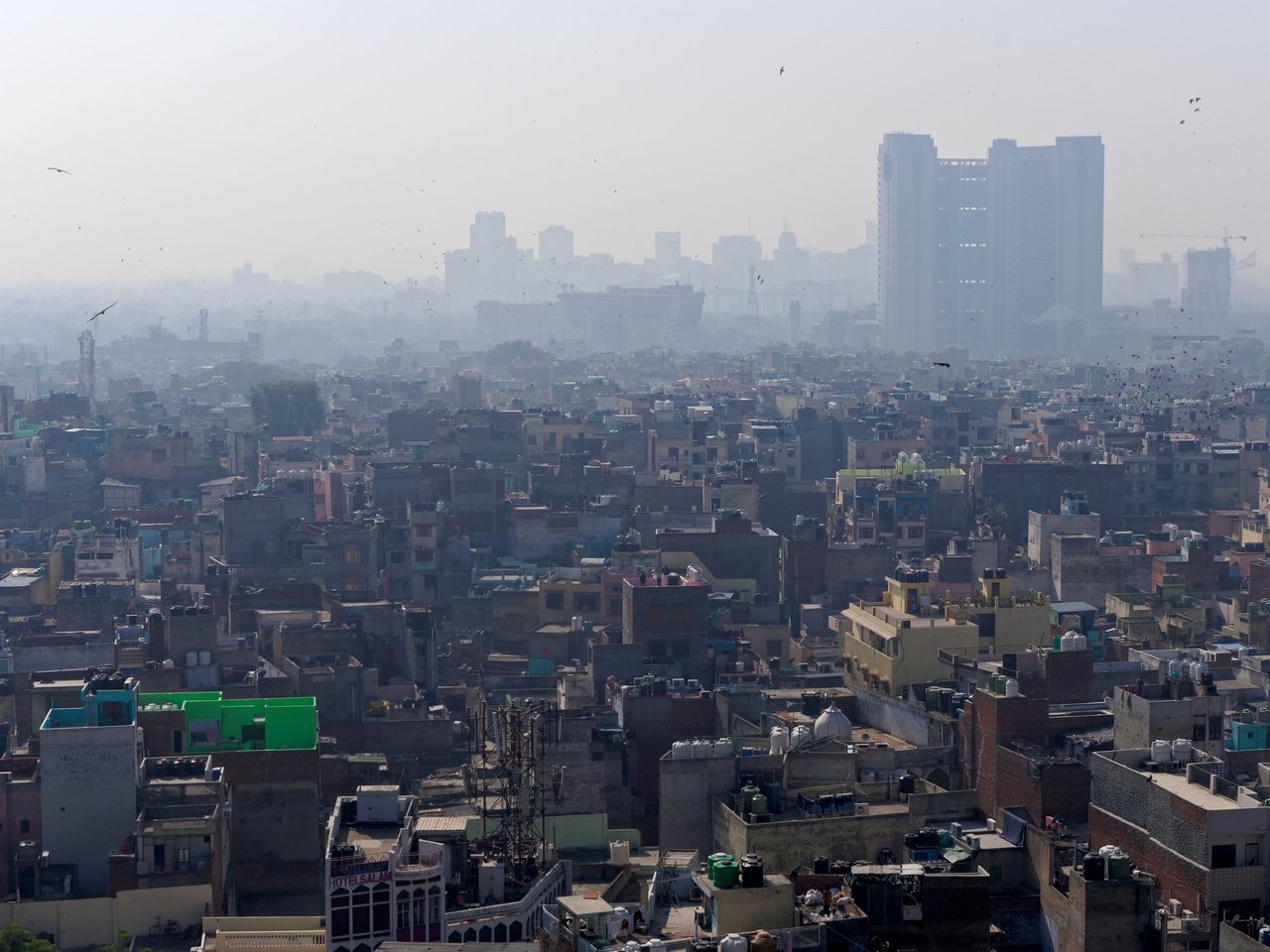
Delhi’s air stayed in the “moderate” band through Saturday, ending three straight days of poor air quality. The Central Pollution Control Board’s 4 pm bulletin put the city’s 24-hour average air quality index (AQI) at 191, down from 230 at the same time on Friday.
The Delhi government said it was the city’s best reading for 24 October in a decade, leaving out the Covid years. On the same date the AQI was 306 in 2024 and 275 in 2025.
Environment Minister Manjinder Singh Sirsa credited enforcement on the ground and public participation. “We’re making steady progress, but the fight is far from over,” he wrote on X. “The Delhi Government is working in war mode to curb pollution and is doing everything possible to give Delhi cleaner air.”
What the government says it did
The Environment Department released figures for the previous 24 hours to back the claim. Officials issued 9,883 challans to vehicles, mechanically swept 2,810 km of roads and sprinkled water over 1,075 km to keep dust down. They removed 12,702 tonnes of waste and 2,223 tonnes of construction and demolition debris, inspected 160 building sites and collected 168 tonnes of road dust.
Sirsa also pointed to Friday’s numbers. The AQI on 23 October was 230 this year, against 305 on the same date in 2025 and 364 in 2024.
Poor air in the north of the city
The citywide average hid dirtier pockets. During the day, Jahangirpuri recorded 284, Narela 282, Vivek Vihar 277, Mundka 270 and Sonia Vihar 259, all in the poor range. Noida was at 199, just short of poor.
Across the wider region, the air was worse in western Uttar Pradesh. Baraut recorded 339, in the “very poor” band, with Meerut at 318 and Gajraula at 298. Baghpat and Sonipat were close to 270.
Before this week, Delhi and the National Capital Region had gone 99 days in a row, from 14 July to 20 October, without a single “poor” day, the longest such stretch since AQI monitoring began in 2015. Wednesday, at 245, broke it.
Harder months ahead
Anil K Gupta, a member of the CPCB board, said the authorities were taking preventive steps and that better control of road dust had helped this year. He warned, though, that November and December could prove harder, when cooler temperatures and moisture tend to trap pollutants close to the ground.
The weather offered no immediate change. Safdarjung recorded a minimum of 18.3°C on Saturday, 1.1 degrees above normal, and a maximum of 32.9°C. Ayanagar was the coldest spot at 17°C.
The India Meteorological Department expects partly cloudy skies for the next few days. Saturday’s improvement owed much to stronger daytime winds, which helped disperse pollutants.