WorldPakistan
Pakistan's minorities still face blasphemy abuse and forced conversions, HRCP says
The rights commission's annual report on religious freedom says new laws have not stopped attacks on Ahmadis or the abduction of Hindu and Christian girls, and that a minorities commission is yet to be set up.
Key points
- HRCP's seventh annual report, Sanctuary Denied, was launched in Lahore on Thursday.
- It says Hindu and Christian girls still face abduction and forced marriage.
- The National Commission for Minorities has not been constituted months after the law passed.
Religious minorities in Pakistan continue to face misuse of blasphemy laws, forced marriages and conversions, hate speech and discrimination, despite recent laws meant to protect them, the Human Rights Commission of Pakistan said on Thursday.
The commission’s seventh annual report on freedom of religion or belief, titled “Sanctuary Denied”, was launched in Lahore. It says scores of people accused of blasphemy remain in legal limbo, and that the alleged members of an “organised entrapment network” have not been investigated.
The report documents attacks on the Ahmadi community in Chenab Nagar in October 2025 and June 2026, and growing efforts to shut Ahmadis out of public and commercial life. Christian and Hindu girls continue to be abducted and forced into marriage, it says, a problem made worse by poverty and weak police responses.
Minority rights defender Nabila Feroz Bhatti pointed to the case of Kamran Gill, a Christian medical practitioner from Sheikhupura whose dispensary was set on fire by a mob on 9 October after he was accused of sharing blasphemous content online.
A law still waiting
HRCP welcomed the National Commission for Minorities Act 2025 and laws in Punjab and Balochistan setting 18 as the minimum age of marriage, but noted that the minorities commission has still not been formed. It urged the federal government to set it up without delay and asked Khyber Pakhtunkhwa to legislate the same marriage age.
HRCP director Farah Zia warned that the state’s approach to minorities was becoming increasingly exclusionary. Raja Ashraf, the commission’s vice-chair in Punjab, said blasphemy accusations had become a “means of exploiting and endangering vulnerable people.”
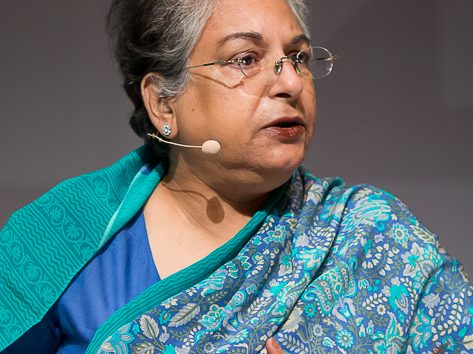
Former chairperson Hina Jilani said the discrimination was built into institutions. “Democracy should have no concept of ‘minority’ and ‘majority’,” she said.
Among its recommendations, the report asks that no place of worship be demolished without a clear court order, that conversions take place before a court or a government official, and that senior officers handle blasphemy investigations.