WorldMiddle East
Iran says it offered through Pakistan to reopen Hormuz; Pezeshkian wants out of 'no war, no peace'
Tehran's ambassador in Islamabad said the offer went with Field Marshal Asim Munir and that Trump turned it down. At home, the president admitted many Iranians are struggling to put food on the table.
Key points
- Iran's envoy said Tehran would reopen the Strait of Hormuz if the US lifted its naval blockade.
- The offer was passed on during Asim Munir's visit to Tehran, he said, and Trump rejected it.
- Pezeshkian said Iran must get out of the "no war, no peace" situation.
Iran told the United States, through Pakistan, that it was ready to reopen the Strait of Hormuz if Washington lifted its naval blockade of Iranian ports, Tehran’s ambassador in Islamabad said on Saturday night. President Donald Trump, he said, said no.
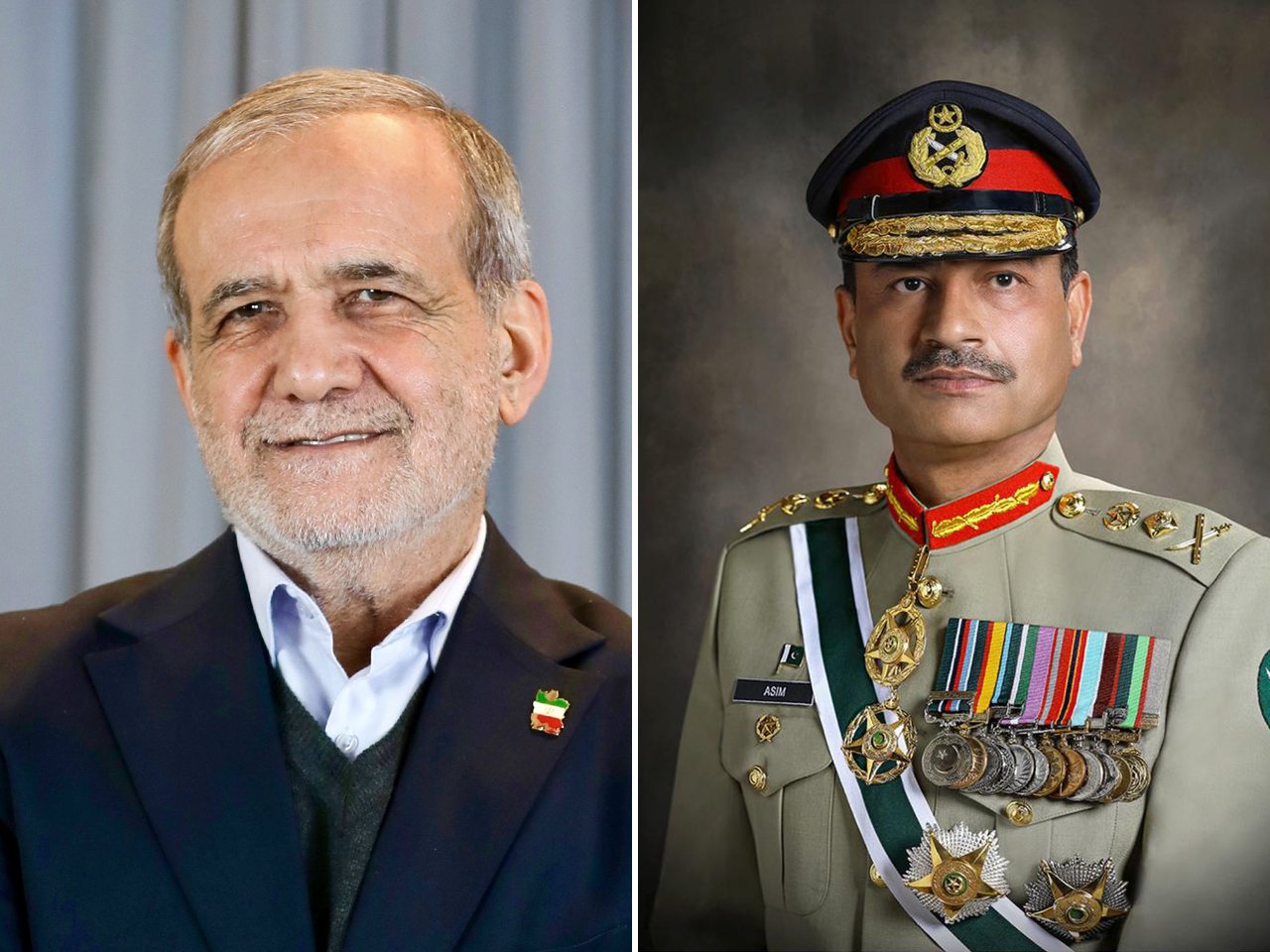
Reza Amiri Moghadam told a seminar in the Pakistani capital that the offer was conveyed during the recent visit to Tehran of Field Marshal Asim Munir, Pakistan’s Chief of Defence Forces, on the condition that the blockade end. He accused Trump of rejecting it by insisting the blockade of Iranian ports would continue.
The account puts Pakistan at the centre of the back-channel between Tehran and Washington as the war, which began with US-Israeli strikes on 28 February, nears its eighth month. A ceasefire in April broke down in July after attacks on ships in Hormuz, and US strikes resumed.
“No war, no peace”
In Tehran, President Masoud Pezeshkian struck an unusually frank note. Speaking at a ceremony, he said Iran must “get out of the ‘no war, no peace’ situation” and called for unity.
In remarks broadcast on state television, he blamed the Americans for the collapse of an interim deal, saying they had “messed everything up”. He still wanted to try again. “I still think we should go and conclude it,” he said.
Later, in a speech posted on his website, he spoke of the toll on ordinary Iranians. “There are many people in this society who are struggling to put food on the table,” he said, linking the hardship to wartime conditions.
Pressure from Washington
Trump has said the US may carry out another military operation against Iran. A memo from Director of National Intelligence Jay Clayton to Secretary of State Marco Rubio, dated 23 October and confirmed by a US official, warned that Iran had stepped up efforts to target American officials abroad. “The lethal plotting efforts by the Iranians against US citizens have reached advanced stages,” Clayton wrote.
Pezeshkian is due in Moscow this week. Overnight, Iran’s judiciary said its chief, Gholamhossein Mohseni Ejei, had met Supreme Leader Mojtaba Khamenei to discuss “securing public rights” and fighting corruption. Mojtaba Khamenei has communicated only in writing since succeeding his father and has not appeared on video. The time and place of the meeting were not disclosed.
The India link
India has kept up shipments of life-saving medicines to Iran despite disrupted flights, the foreign ministry said this week. Any reopening of Hormuz, the route for a large share of Gulf oil and gas, would ease pressure on fuel prices and shipping for importers such as India.