WorldMiddle East
Netanyahu shuts Hebron, orders West Bank lockdown after checkpoint gunfight
Two Palestinian gunmen were killed and at least five Israeli soldiers wounded near Hebron on Friday, four days before Israel votes in a general election.
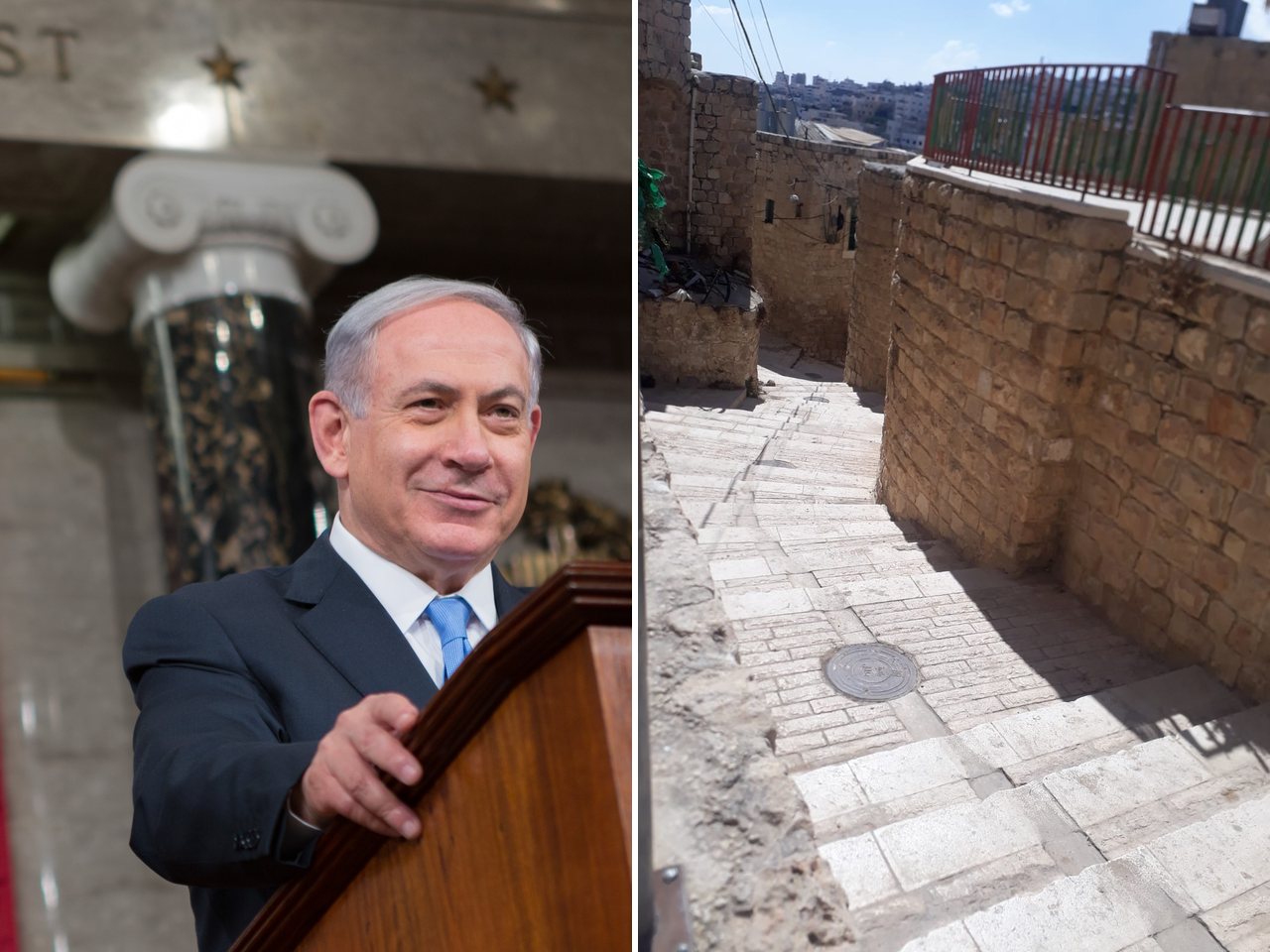
Key points
- Israel's military said it killed two Palestinian gunmen who opened fire on reservists near the settlement of Telem.
- Benjamin Netanyahu closed Hebron and told forces to prepare a full lockdown of the West Bank.
- The attack comes days before Israel's general election on Tuesday.
Israeli Prime Minister Benjamin Netanyahu sealed off the city of Hebron on Friday and told security forces to prepare a full lockdown of the occupied West Bank, hours after a gunfight at a checkpoint left two Palestinian attackers dead and several Israeli soldiers wounded.
The Israeli military said its troops killed two Palestinian gunmen who had attacked a reserve battalion near the settlement of Telem, west of Hebron. The two men, travelling in a car with Israeli licence plates, opened fire on soldiers at the checkpoint. Witnesses said the exchange went on for about 20 minutes, which made it hard to get the wounded out. Israel’s ambulance service said at least five soldiers were hurt, two of them critically. The army later arrested two other Palestinians.
Netanyahu said the security forces had prevented a “major attack”. He ordered Hebron closed and said forces should “prepare for a full lockdown across all of Judea and Samaria starting today”, using the Israeli government’s name for the West Bank. He also cancelled a string of campaign engagements.
Days before the vote
The shooting lands in the final stretch of an Israeli general election due on Tuesday, in which security in the West Bank and the war in Gaza are central. National Security Minister Itamar Ben-Gvir, of the far right, used it to call for Israel to take full control of the territory and to dismantle the Palestinian Authority. “We have to act before it’s too late,” he said.
Hamas, Palestinian Islamic Jihad and the Popular Front for the Liberation of Palestine praised the attack, calling it an answer to Israeli raids, settler violence and the war in Gaza, and urged further confrontation.
A full closure would cut movement between Palestinian towns and villages across the West Bank in the middle of the olive harvest, the season on which many farming families depend.
A week of raids and harvest attacks
The lockdown order follows days of tension. Israeli forces arrested 36 Palestinians across the West Bank on Thursday, according to Palestinian prisoners’ groups and the official Wafa news agency, including 10 in Jenin governorate and 14 in Khirbet Jawaya in Masafer Yatta, south of Hebron.
The Palestinian Colonization and Wall Resistance Commission recorded 17 attacks by Israeli forces and settlers on farmers and their land on Thursday alone, in Hebron, Qalqilya, Nablus, Ramallah and el-Bireh, Jenin and Salfit. It listed assaults, crops and equipment stolen, olive trees set on fire and live fire. On Wednesday, US Democratic congressional candidate Brad Lander was briefly detained by Israeli troops while helping Palestinian farmers pick olives.
The India angle
The escalation comes a day after Netanyahu spoke to Prime Minister Narendra Modi. After the call on Thursday night, Modi said the two leaders had “reaffirmed our commitment to further strengthening our partnership” and that he had “underscored the urgent need to restore peace and stability in the region”. Netanyahu said he had invited Modi to light a torch on Israel’s Independence Day together with Captain Smit Machchhar, the Indian pilot who helped overpower an attacker on a Tel Aviv-bound flydubai flight on 30 September.
India has not commented on Friday’s shooting or the lockdown order.