WorldUS courts
US Supreme Court takes up Maryland magnet school race case and home distilling ban
The justices also turned away a fired NLRB member's bid for reinstatement and a Google challenge to a patent office policy, in Monday's orders.
Key points
- The court will hear a challenge by Asian-American parents to admissions at Montgomery County's magnet middle schools.
- It will also decide whether an 1868 federal ban on home distilleries is constitutional.
- It refused to hear Gwynne Wilcox's case, leaving her removal from the NLRB in place.
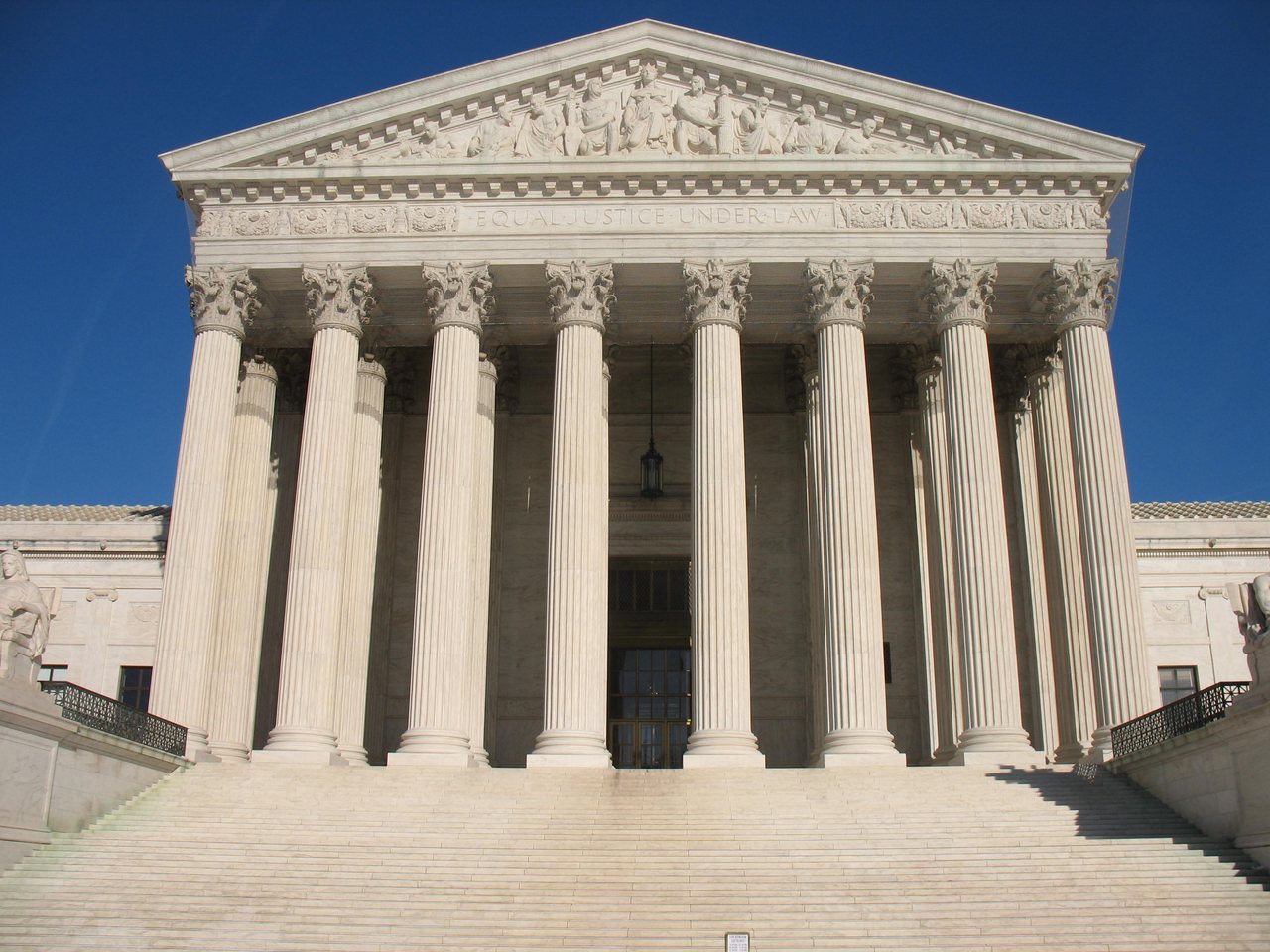
The US Supreme Court on Monday agreed to decide a challenge by Asian-American parents to admissions at Maryland’s selective magnet middle schools, putting race and school admissions back before the justices for the first time since they declined two similar cases in 2024.
In the same set of orders, from their 16 October conference, the justices also took up the federal government’s defence of a ban on home distilleries dating to 1868, and turned away two closely watched appeals: one by a former labour board member fired by President Donald Trump, the other by Google.
The magnet school case
The case, Association for Education Fairness v. Montgomery County Board of Education, was brought by a group of mostly Asian-American parents in Montgomery County, outside Washington. They say a lottery-based admissions process the county adopted in 2021-22 was designed to reduce the number of Asian-American pupils at its most selective middle schools.
US District Judge Paula Xinis dismissed the suit, finding that the parents had not plausibly shown a disproportionate burden, because the share of Asian-American pupils admitted “substantially outpaces” their share of applicants. The 4th Circuit Court of Appeals upheld her ruling in February.
The question the justices will now answer is whether someone challenging a race-neutral policy as discriminatory must show that the targeted group suffered a disparate impact compared with its share of the applicant pool. The school board told the court the case was “unremarkable and of little significance”. Arguments are expected early next year.
In February 2024 the court refused to hear a challenge to admissions at Thomas Jefferson High School for Science and Technology in Virginia, and in December 2024 it turned away a case over three Boston public high schools.
Home stills on trial
In Department of Justice v. McNutt, the government is appealing a 5th Circuit ruling that the home-distillery ban exceeds Congress’s power to tax. The appeals court wrote that “preventing activity lest it give rise to tax evasion places no limit whatsoever on Congress’s power under the taxation clause.” Breaking the law can bring a fine of up to $10,000, five years in prison, or both.
The suit was filed in 2023 by the Hobby Distillers Association and some of its members. The 6th Circuit reached the opposite conclusion in a case brought by John Ream, a retired aerospace engineer, leaving a split the justices will resolve, probably by the end of June.
Appeals turned away
Without comment, the court declined to hear Gwynne Wilcox, a National Labor Relations Board member nominated by President Joe Biden whom Trump removed in 2025. Her case had largely been settled by the court’s June ruling in Trump v. Slaughter, which struck down removal protections for Federal Trade Commission members. The refusal leaves the board with a 3-1 Republican majority.
The justices also rejected Google’s challenge to a US Patent and Trademark Office policy that makes it harder to seek reviews of patents in force for more than six years. Google had argued that “the PTO (Patent and Trademark Office) has no authority to create a limitations period where Congress did not.” The patent board took up 37% of review requests in 2026, down from 65% under the previous director, Kathi Vidal.