WorldMiddle East
Two cargo ships sink near Hormuz as Iran says the strait stays shut
A Singapore-flagged container ship went down after being hit on Tuesday, and a bulk carrier struck in September has also sunk. Pezeshkian said bombs and missiles would not force Iran to surrender.
Key points
- The Singapore-flagged GFS Pride sank after being hit in the strait; all 21 crew got off safely.
- At least ten vessels have been attacked around Hormuz since Sunday, the most since the war began.
- Brent crude eased to about $104 a barrel after Trump said the war would end very soon.
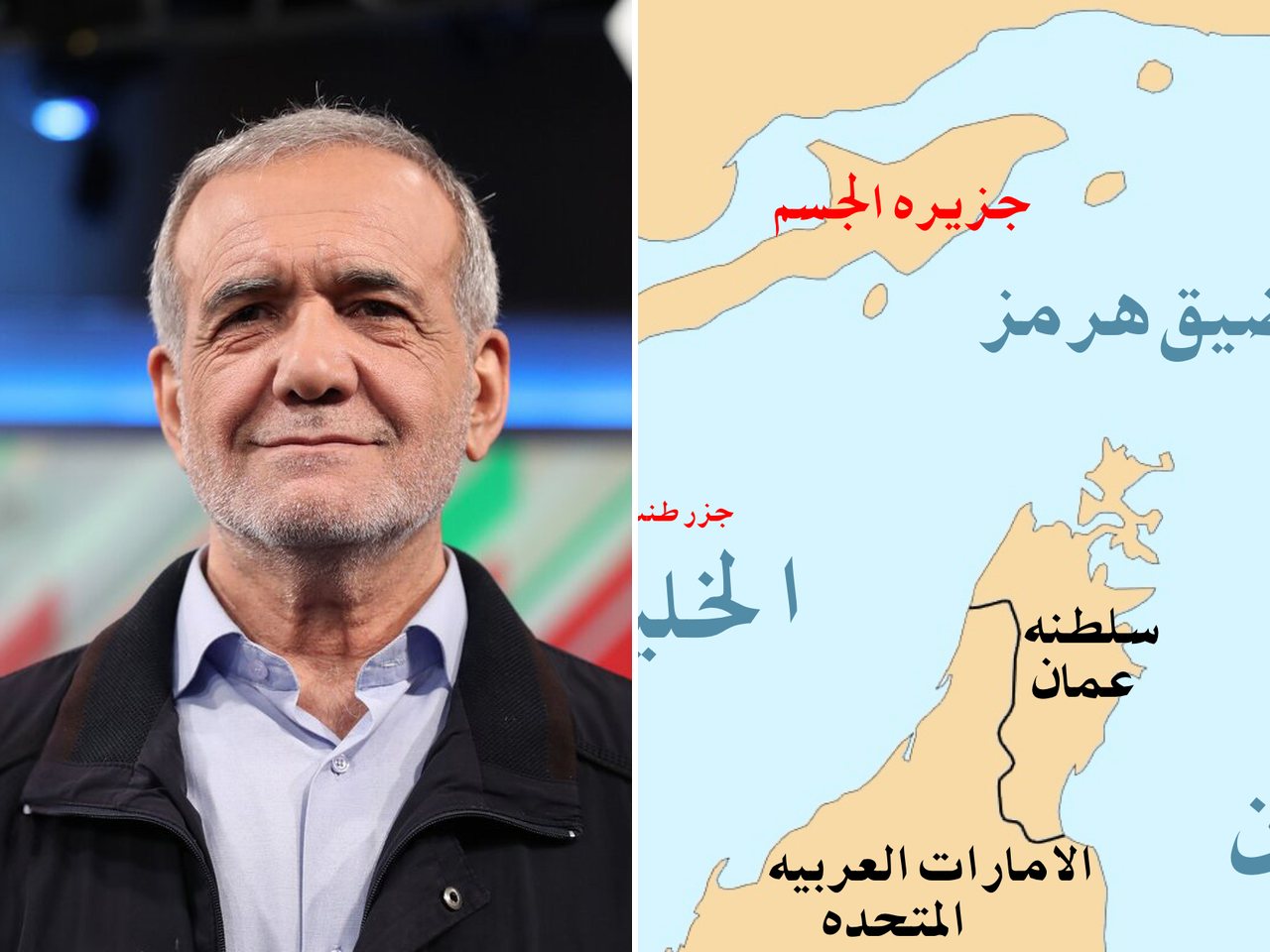
Two merchant ships have sunk near the Strait of Hormuz after being hit by projectiles, as Iran’s army insisted the waterway remains closed and President Masoud Pezeshkian told his country that military pressure would not bring it to its knees.
The Maritime and Port Authority of Singapore said the GFS Pride, a small Singapore-flagged container ship that can carry 2,824 containers, was crossing the strait on Tuesday when it was struck. It “sustained damage and a fire on board, and has since sunk,” the authority said. All 21 crew were taken off safely and nobody was hurt.
The second vessel, the Antigua and Barbuda-flagged bulk carrier Cape Dao, went down close to the strait weeks after it was hit on 23 September. One crew member was killed in that strike and the rest were evacuated at once, maritime sources said. Its manager, the UAE-based Peonies Shipmanagement, could not be reached.
The two are the second and third ships to sink since the US-Iran war began on 28 February. The Singapore authority said it was “deeply concerned” by the continuing attacks on commercial shipping, which it called unprovoked and a breach of international law.
The busiest week of attacks
At least ten vessels have been attacked around the strait since Sunday, the highest count since the fighting started, and two seafarers are missing. Iran’s army said on Thursday that Hormuz stays closed and that any ship wanting to pass must coordinate with Iranian forces.
Maritime risk firm MARISKS said the sinkings showed the danger was no longer limited to tankers, with container ships and bulk carriers also taking serious damage.
Pezeshkian and Trump
Speaking at a National Nurses Day ceremony on Thursday, Pezeshkian said the country’s real risk lay at home. “Bombs and missiles can’t force a nation to surrender, but if we become divided internally, the enemy will achieve its goal,” he said. He told officials to avoid words or actions that could split the country and to work to rebuild public trust.
In Montana, US President Donald Trump told reporters that “the Iran war will end very soon” and added: “They’ll never have a nuclear weapon, and oil prices will drop like a rock.” At a rally later he said Iran’s navy, air force and leadership had been destroyed, and joked: “I should have probably left their leaders because I don’t know who the hell we’re negotiating with.”
Oil slipped after his remarks. Brent crude was down $1.76 at $104.30 a barrel on Thursday morning, and US crude fell to $94.03.
Missile near Medina
On the Arabian Peninsula, Turki al-Maliki, spokesperson for the Saudi-led coalition, said its forces intercepted and destroyed a cruise missile in the area around Medina. The Houthis denied carrying out any attack on Saudi Arabia on Thursday.
The fallout is spreading to diplomacy. A summit between the European Union and the Gulf Cooperation Council, planned for 24 October in Riyadh, has been postponed.
The run of attacks began on Sunday, when a drone hit the tanker MT Petro Dolphin at Sohar anchorage in Oman. Two of its Indian crew, Bir Bahadur Yadav and Amit Singh, were reported missing after the strike.