PolicyDiplomacy
Rubio lands in Mumbai for Jaishankar talks with trade deal 'very close'
The US Secretary of State began a three-day visit on Tuesday, with a 26/11 memorial tribute, talks at the Taj and an energy stop in Jamnagar ahead, as both sides say a trade pact is near.
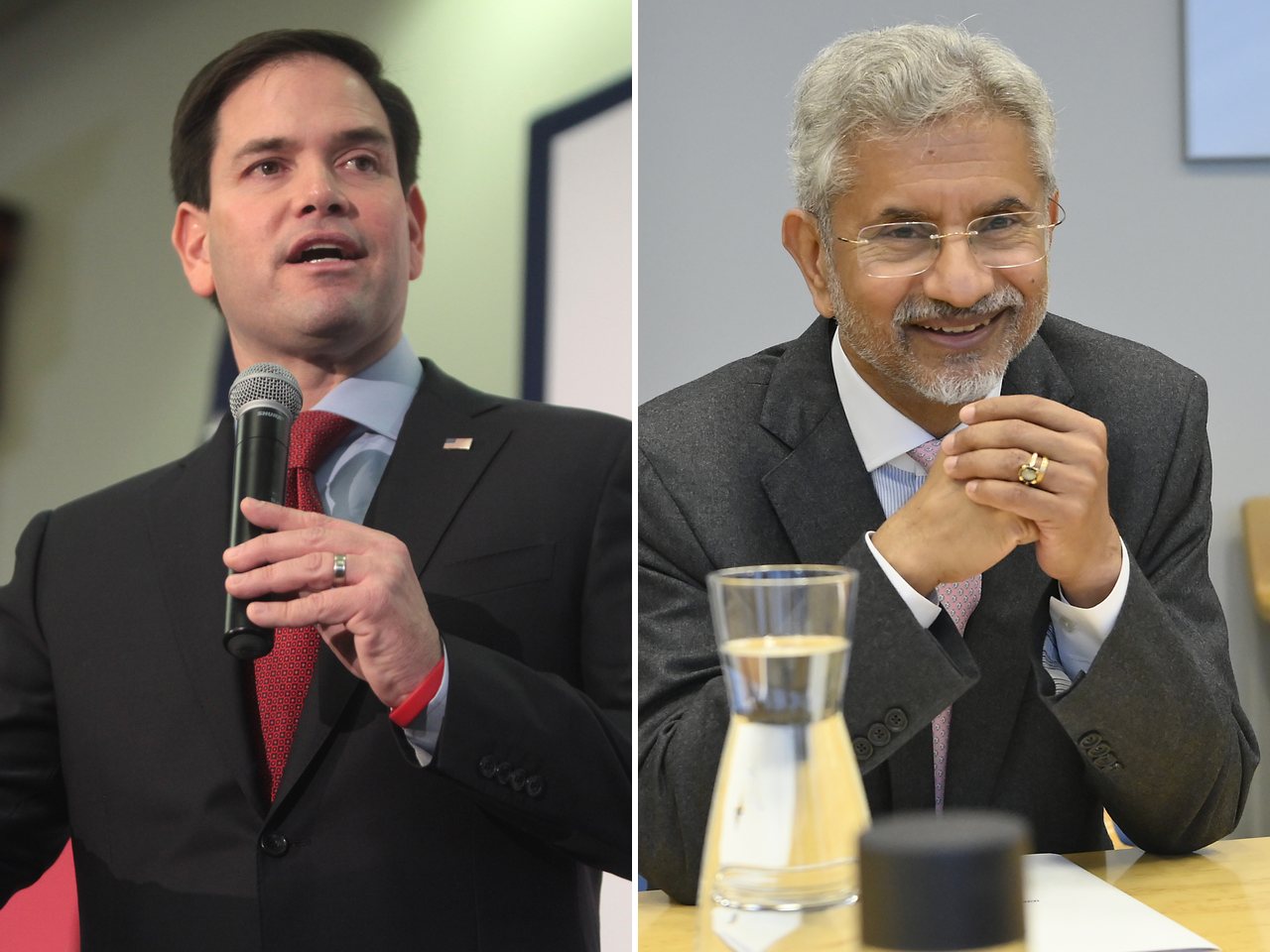
Key points
- Marco Rubio arrived in Mumbai on Tuesday for a three-day visit to India that skips New Delhi.
- He lays a wreath at the Taj Memorial at 3:40 pm before talks with S Jaishankar at the same venue.
- Rubio says the US is very close to finalising a trade deal with India.
US Secretary of State Marco Rubio arrived in Mumbai on Tuesday afternoon for a three-day visit to India, bringing with him the clearest signal yet from Washington that a long-delayed trade agreement is close.
“We’re trying to finalise a trade deal with India right now. We’re very close to doing that,” Rubio said in Uzbekistan before flying in. External Affairs Minister S Jaishankar said a few days ago that the negotiations were nearing a “landing point”.
Rubio was due to land at Chhatrapati Shivaji Maharaj International Airport at 2:15 pm, the Ministry of External Affairs said. His wife, Jeanette Rubio, and the US Ambassador to India, Sergio Gor, are with him. “Great to be back in Mumbai, this time with my friend US Secretary of State Marco Rubio,” Gor wrote on X. “Looking forward to a productive visit and to advancing U.S.-India ties.”
Wreath first, then talks at the Taj
His first stop is the Taj Memorial at the Taj Mahal Palace hotel, where at 3:40 pm he lays a wreath for the victims of the 26 November 2008 attacks, which killed more than 160 people, six of them American. The talks with Jaishankar follow at the same venue.
In the evening he attends the “Freedom 250” reception at the Jio World Convention Centre to mark the 250th anniversary of American independence, where Jaishankar is guest of honour. A meeting with Maharashtra Chief Minister Devendra Fadnavis is also expected. On Wednesday Rubio flies to Jamnagar in Gujarat, home to Reliance Industries’ refinery complex, for talks the US State Department says will cover “enhanced energy cooperation”. A large business delegation is travelling with him.
Before Rubio landed, Jaishankar met a visiting US Congressional delegation in Mumbai. “Specifically discussed trade, energy, security and technology aspects of our relationship,” he wrote afterwards. “Appreciate their positive sentiments and interest in taking forward India-US ties.”
What is on the table
MEA spokesperson Randhir Jaiswal said last week that the discussions were “expected to cover key areas of bilateral cooperation, including energy, trade and investment”. Defence, critical and emerging technologies and the war in West Asia are also on the agenda, as are ways to strengthen what both governments call the Comprehensive Global Strategic Partnership. “The visit will provide an opportunity to sustain the high-level engagement between the two countries,” Jaiswal said.
Trade talks have been running since early 2025. New Delhi wants better tariff terms in the US market than its competitors get, while Washington has pressed on non-tariff barriers and market access.
Russian oil hangs over the conversation. Last week President Donald Trump suspended certain sanctions on Russia and on five of its largest oil buyers, India among them. Rubio has linked that relief to the trade negotiations. “That’s one of the things we take into consideration when the President makes a decision about national security waivers,” he said.
A relationship under repair
Relations fell sharply last year after Washington imposed punitive tariffs on Indian goods. Trump’s repeated claims about his role in ending the May 2025 clashes between India and Pakistan drew sharp responses in New Delhi, and a higher H-1B visa fee and a recent US decision to restrict a green card processing programme used by Indian IT firms such as TCS and Wipro added to the strain.
This is Rubio’s second visit to India this year. In May he met Prime Minister Narendra Modi and Jaishankar and attended the Quad foreign ministers’ meeting in New Delhi.
The choice of Mumbai over the capital drew criticism from the Congress last week. The MEA replied that receiving foreign dignitaries outside New Delhi is established practice, citing earlier visits hosted in Vadodara, Ahmedabad, Varanasi, Goa, Kevadia and Amritsar.