Science & TechSpace
Japan's Phobos sample-return probe MMX due to lift off just after 1 am IST
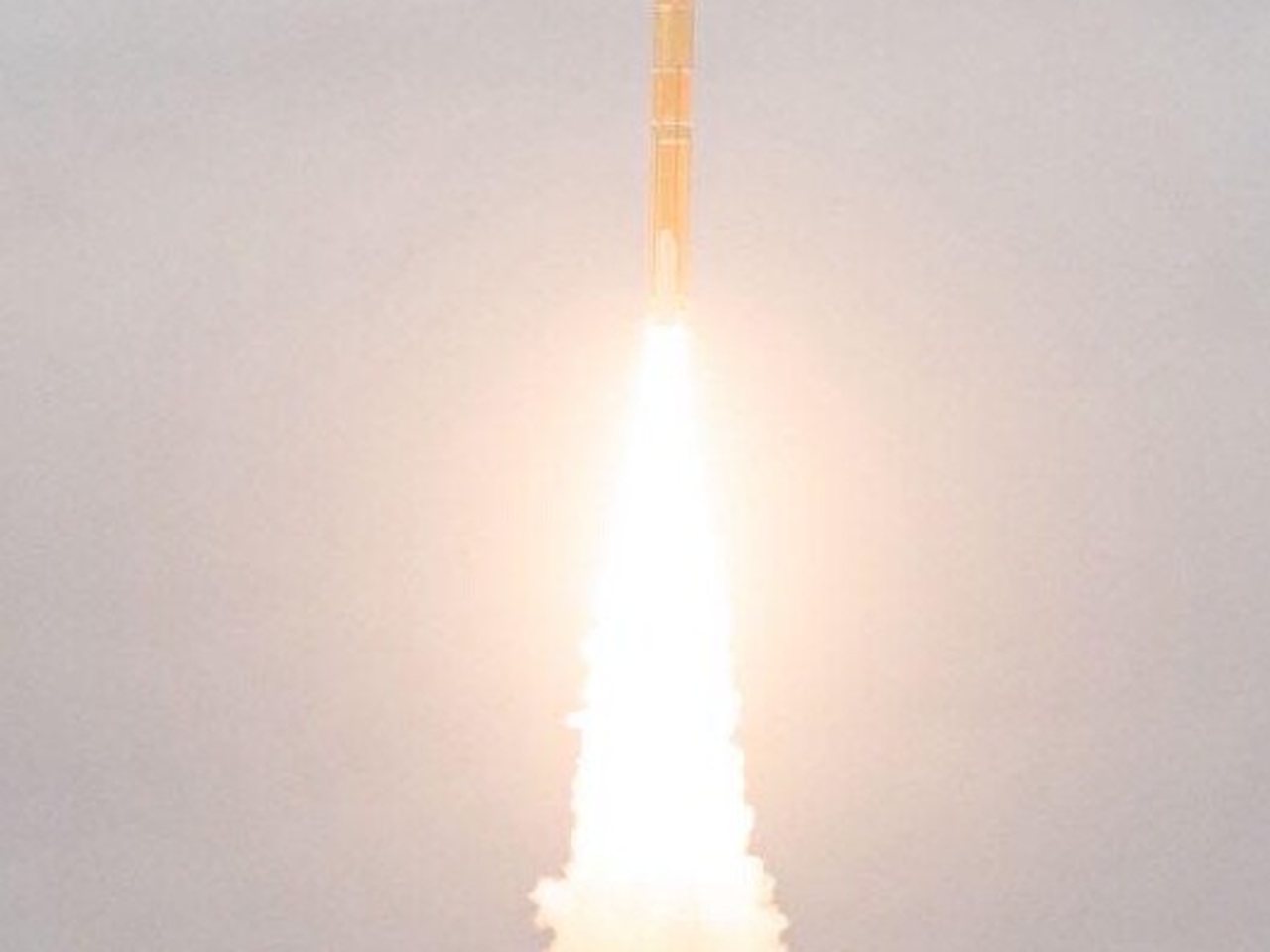
An H3 rocket is scheduled to launch the Martian Moons eXploration spacecraft from Tanegashima early on Tuesday, opening a five-year round trip to bring home the first pieces of a moon of Mars.
Key points
- Launch is set for 4:41 am Japan time on 20 October, which is 1:11 am IST on Tuesday.
- MMX aims to collect at least 10 grams of material from Phobos.
- A capsule is due to land in Woomera, Australia, in 2031.
Japan is due to launch its Martian Moons eXploration probe in the early hours of Tuesday, India time, on a mission to bring back the first samples ever collected from a moon of Mars.
An H3 rocket is scheduled to lift off from the Tanegashima Space Center in southern Japan at 4:41 am local time on 20 October, which is 1:11 am IST. If weather or technical problems intervene, the launch window stays open until 7 November.
The Japan Aerospace Exploration Agency (JAXA) leads the mission with NASA, the European Space Agency and the French and German space agencies, CNES and DLR.
What the mission will do
MMX should reach Mars orbit in August 2027 and move into orbit around Phobos, the larger of Mars’s two moons, the following month. It will drop a 25 kg French-German rover named Idefix on the surface, then in 2030 collect at least 10 grams of material from two sites.
On the way home its return module will fly past Deimos, the smaller moon, and study Mars itself. A sample capsule is due to land in the Woomera Prohibited Area in Australia in 2031, where the material will be recovered and shared with scientists.
“Understanding how Mars and the two moons formed is a heavily debated topic in solar system science,” JAXA says in its mission description. Researchers hope the samples will settle whether Phobos and Deimos are captured asteroids or debris thrown up by a giant impact on Mars.
The flight was originally planned for 2024 but slipped after problems with the H3 rocket.
The documents
- The Martian Moons eXploration MMX missionEuropean Space Agency, 1 October 2026