Science & TechSpace
SpaceX cargo Dragon docks at space station with final solar arrays
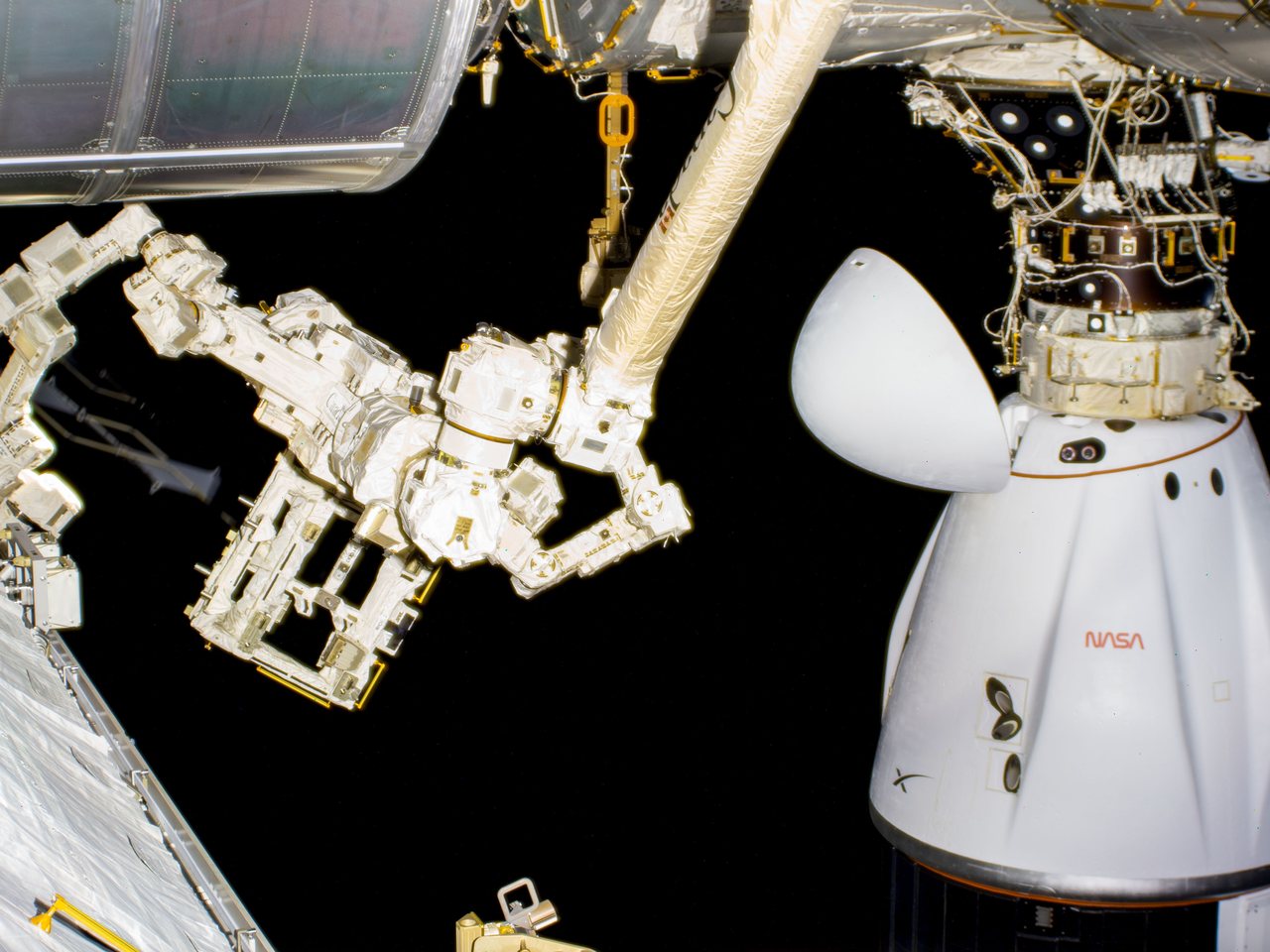
The CRS-35 capsule latched on to the International Space Station on Thursday evening India time, two days after launch, carrying about 2,860 kg of supplies and research.
Key points
- Dragon docked on its own at 7:57 pm IST on Thursday as the station flew over South Africa.
- It brought the station's last set of roll-out solar arrays, to be fitted on spacewalks.
- The capsule will stay until mid-November before splashing down off California.
A SpaceX Dragon cargo capsule docked with the International Space Station on Thursday evening, delivering about 2,860 kg of supplies, science experiments and the last of the station’s new solar panels.
The uncrewed spacecraft attached itself to the space-facing port of the station’s Harmony module at 10:27 am Eastern time, 7:57 pm IST, as the two flew about 400 km above South Africa. Docking was automatic, with NASA astronaut Anil Menon watching over the approach and the capsule’s procedures from inside the station. Dragon arrived a little more than two days after its launch from Cape Canaveral on Tuesday.
The flight, CRS-35, is SpaceX’s 35th resupply mission for NASA under its Commercial Resupply Services contract.
What the crew will unpack
The biggest items aboard are two Roll-Out Solar Array wings, the final pair meant for the station. NASA plans to install them during spacewalks, adding to the power available on the station.
The capsule also carries hardware to make artificial retinas in weightlessness, three-dimensional heart tissue for large-scale drug testing, and small lab-grown models of the human brain that will spend five weeks in orbit before being compared with identical samples kept on the ground.
Coming home
Dragon is due to stay at the station until mid-November. Before it leaves, the crew will pack it with finished experiments, equipment and waste. It will then undock and splash down in the Pacific off the coast of California, bringing time-sensitive research samples back to scientists on Earth.