WorldPakistan
Pakistan says it and Saudi Arabia have ratified the Makkah defence pact, Turkey still to follow
The Foreign Office insisted the three-nation pact has no hidden clauses and targets no country. In Berlin, President Asif Ali Zardari gave Germany's president the same assurance.
Key points
- Pakistan and Saudi Arabia have completed ratification of the Makkah Joint Defence Agreement, the Foreign Office said.
- Under the pact, an armed attack on one member counts as an attack on all.
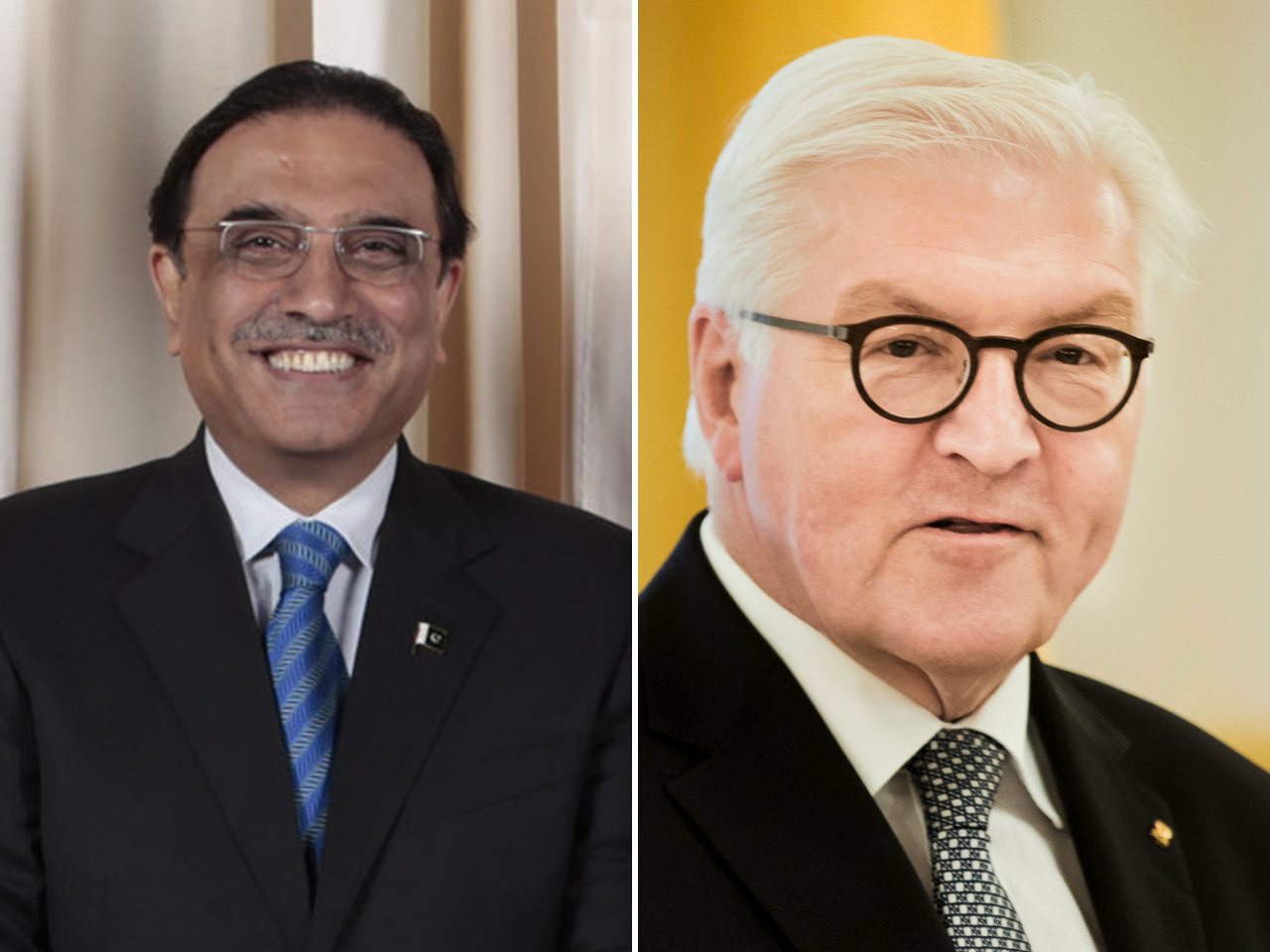
- Asif Ali Zardari told Frank-Walter Steinmeier the pact is not directed against any specific country.
Pakistan and Saudi Arabia have both ratified the Makkah Joint Defence Agreement, Pakistan’s Foreign Office said on Friday, leaving Turkey as the only one of the three signatories still to complete the process.
“Pakistan and [the] Kingdom of Saudi Arabia have already completed their ratification processes,” Foreign Office spokesperson Sajjad Haider Khan told his weekly briefing in Islamabad. “Turkiye is undertaking the requisite procedures in accordance with its domestic legal framework.” Ankara sent the pact to its parliament earlier this week.
The agreement, signed in August, says an armed attack on any one member will be treated as an attack on all three.
“No hidden provisions”
Khan used the briefing to push back at questions over what the pact really commits Pakistan to. “There are no hidden provisions; the agreement is explicit and clear in its provisions and articles,” he said. It was “essentially defensive in nature” and “not directed against any particular country”, he added, and consistent with Article 51 of the UN Charter on self-defence.
The question is pressing because Saudi Arabia is under near-daily missile and drone fire from Yemen’s Houthis. Asked whether the pact would be invoked, Khan said: “This matter has to be decided by the three partner countries in accordance with the agreement.” The nature and extent of any help would be settled jointly, after assessing the circumstances. “We unequivocally condemn attacks against Saudi Arabia,” he said, while backing Yemen’s unity and a negotiated settlement there.
Earlier this week Pakistan’s military spokesman, Lt Gen Ahmed Sharif Chaudhry, said Pakistan would provide “whatever support is needed” to defend the kingdom.
Zardari’s message in Berlin
The same line was delivered in Germany. President Asif Ali Zardari, on a three-day visit marking 75 years of diplomatic ties, told German President Frank-Walter Steinmeier on Friday that the pact was “not directed against any specific country”.
Steinmeier praised Pakistan’s “rising diplomatic profile in the resolution of regional and global disputes”, and Zardari thanked him for recognising Pakistan’s “sincere mediation role” between the US and Iran. On Afghanistan, Zardari said Pakistan “has no conflict with the Afghan people” but would not let terrorists use Afghan soil to attack it. The two also discussed Pakistan’s help in verifying 500 Afghans due to be sent to Germany. Steinmeier said he would consider visiting Pakistan “at an appropriate time”.
Why New Delhi will be watching
For India, the pact’s central clause is the one that matters: once Turkey ratifies, Saudi Arabia and Turkey will be formally bound to treat an armed attack on Pakistan as an attack on themselves. Islamabad’s repeated assurance that the deal targets no country comes in a week when Prime Minister Shehbaz Sharif said any Indian violation of the Indus Waters Treaty would be “an act of war”.
Pakistan has also signed a separate defence cooperation pact, called Badr, with Qatar, Turkey and Indonesia this week.
Updated 24 October 2026, 1:00 am IST: This story was updated after it was first published.