OpinionOur view
Shutting down a city is not how a democracy answers a protest
The CJP must keep its marches peaceful. The state must stop treating them as a threat. And the Election Commission must answer the question at the heart of them.
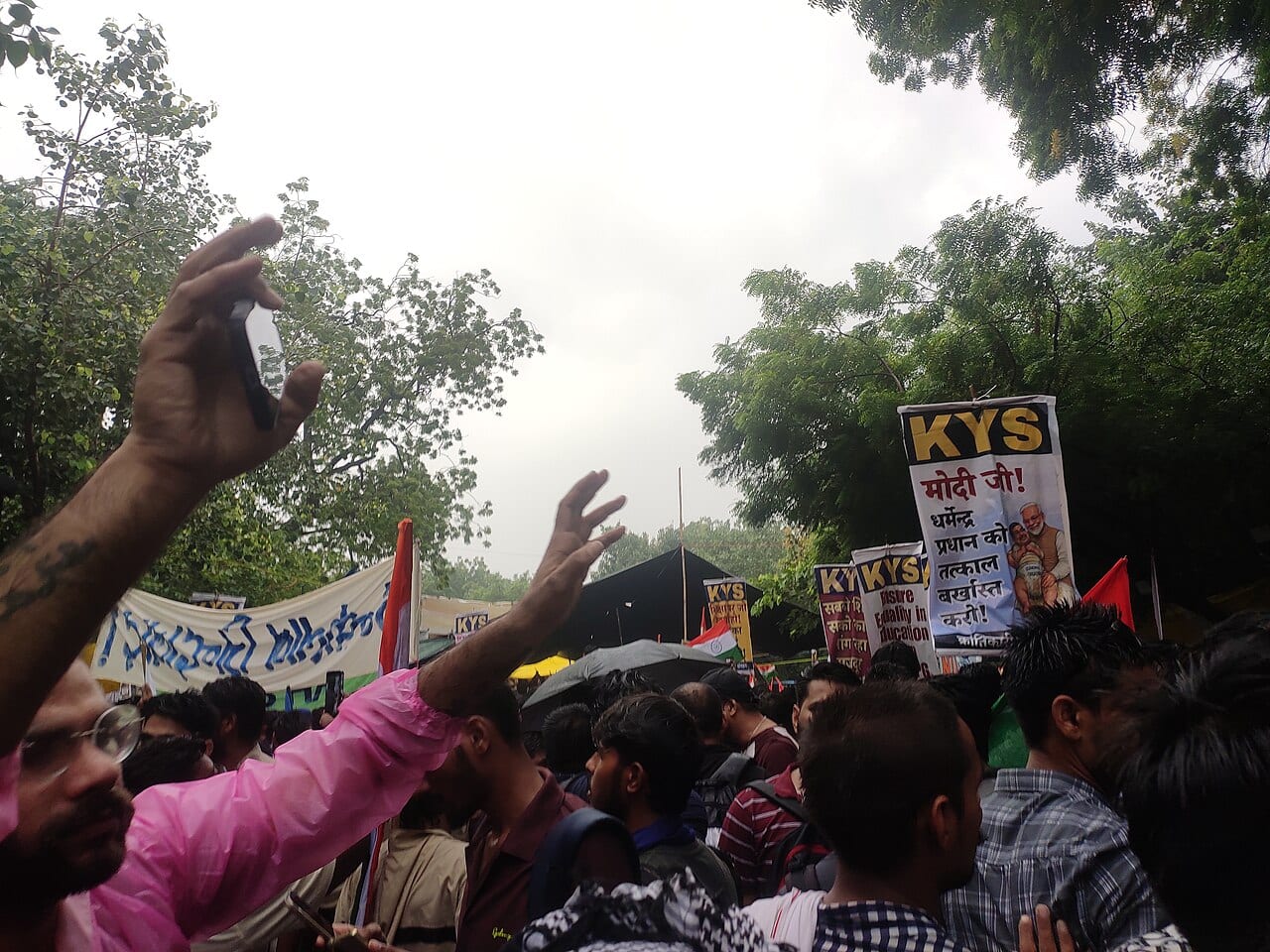
On Saturday, the Union government closed Metro station gates across central Delhi, cut mobile internet around Jantar Mantar and detained thousands of people, including four former chief ministers, to stop a march by the Cockroach Janta Party (CJP). By Sunday the Supreme Court had to sit on a holiday to remind the authorities that people gathering peacefully cannot be held “save and except by procedure established by law”.
That a court had to say this is the measure of how badly the weekend went.
A right, not a favour
The Constitution gives every citizen the right “to assemble peaceably and without arms” and to move freely across the country. The state may limit both, but only reasonably and only for reasons such as public order. Six years ago, in Anuradha Bhasin, the Supreme Court said what that means in practice: restrictions must be necessary, the least restrictive option, limited in time and published, and the power to ban gatherings “cannot be used to suppress legitimate expression”.
Set Saturday against that standard.
What the law expects, and what happened on 10 October
The Delhi Police had a real job to do. They say the CJP broke undertakings given at earlier protests. Stones were thrown near Akashvani Bhawan and Connaught Place, and more than 15 police personnel were reported injured. A force that has to keep a capital running is entitled to set conditions, fix routes and act against violence.
What it is not entitled to do is close a city in advance to keep people from arriving. The Metro shutdown hit every commuter in central Delhi, not just marchers. The internet cut fell on everyone within 4 km. Lawyers and journalists were detained doing their work. None of that is “least restrictive”.
The weekend in six numbers
- About 2,000 detainedA Home Ministry official's estimate; counts range from about 1,000 to over 15,000.
- 45 of 303 stationsMetro stations with entry restricted on 10 October, by the government's own figure.
- 4 kmRadius around Jantar Mantar where mobile internet was cut until Saturday night.
- 20 FIRsRegistered by Delhi Police over the protest, including one against four men accused of assaulting students.
- 15+ police hurtPersonnel reported injured in stone-pelting near Akashvani Bhawan and Connaught Place.
- 1 Sunday sittingThe Supreme Court sat on a holiday to order Metro, rail and internet back to normal.
What each side owes
This is not a contest one side can win by holding out. Each has something it can do this week.
What each side should do now
The CJP has its own test to pass. A movement that began as satire, and whose protests preceded the Education Minister’s resignation in July, has shown it can bring young people onto the streets. It now has to show it can keep them peaceful. A single stone hands the state its justification.
The question underneath
The anger is not really about Jantar Mantar. It is about voter lists. Media counts put the names removed during the Special Intensive Revision at more than 130 million, and two of the Commission’s own members are reported to have objected to SIR decisions at least 14 times in ten months. The Commission says the revision removes dead, duplicate and ineligible voters and that its decisions were taken properly.
If that is right, the Commission can prove it. Publishing deletions by constituency and by reason, and the notes its members wrote, would do more to calm the streets than any number of barricades.
How a meme became a stand-off
- 15 May 2026The Chief Justice's 'cockroaches' remark; the CJP starts online soon after.
- 25 Jul 2026Education Minister Dharmendra Pradhan resigns after 36 days of NEET protests.
- Late Sep 2026Reports of dissent inside the Election Commission; the CJP demands the CEC's resignation.
- 10 Oct 2026Metro gates shut, internet cut, thousands detained in Delhi.
- 11 Oct 2026Supreme Court orders services restored; CJP leaders released on bonds.
- 13 Oct 2026Contempt and detention petitions return to the Supreme Court.
The Supreme Court has done its part for now. When it hears the contempt plea on Tuesday, the Centre should arrive with more than an affidavit. It should arrive with a plan to let people protest, and an Election Commission ready to answer them.
The reporting behind this view
- 45 of 303Delhi Metro stations with entry restricted on 10 October, per the Solicitor General
- About 2,000people detained in Delhi, per a Home Ministry official; other counts differ
- 130 million+names removed from voter lists during the SIR so far, by media counts