ParliamentMonsoon Session
Monsoon Session 2026 ends with the Lok Sabha's lowest output this term
The Lok Sabha worked 15% of its scheduled time by PRS's count and 19% by the government's. Nine of the 11 Bills it passed had no speaker but the minister.
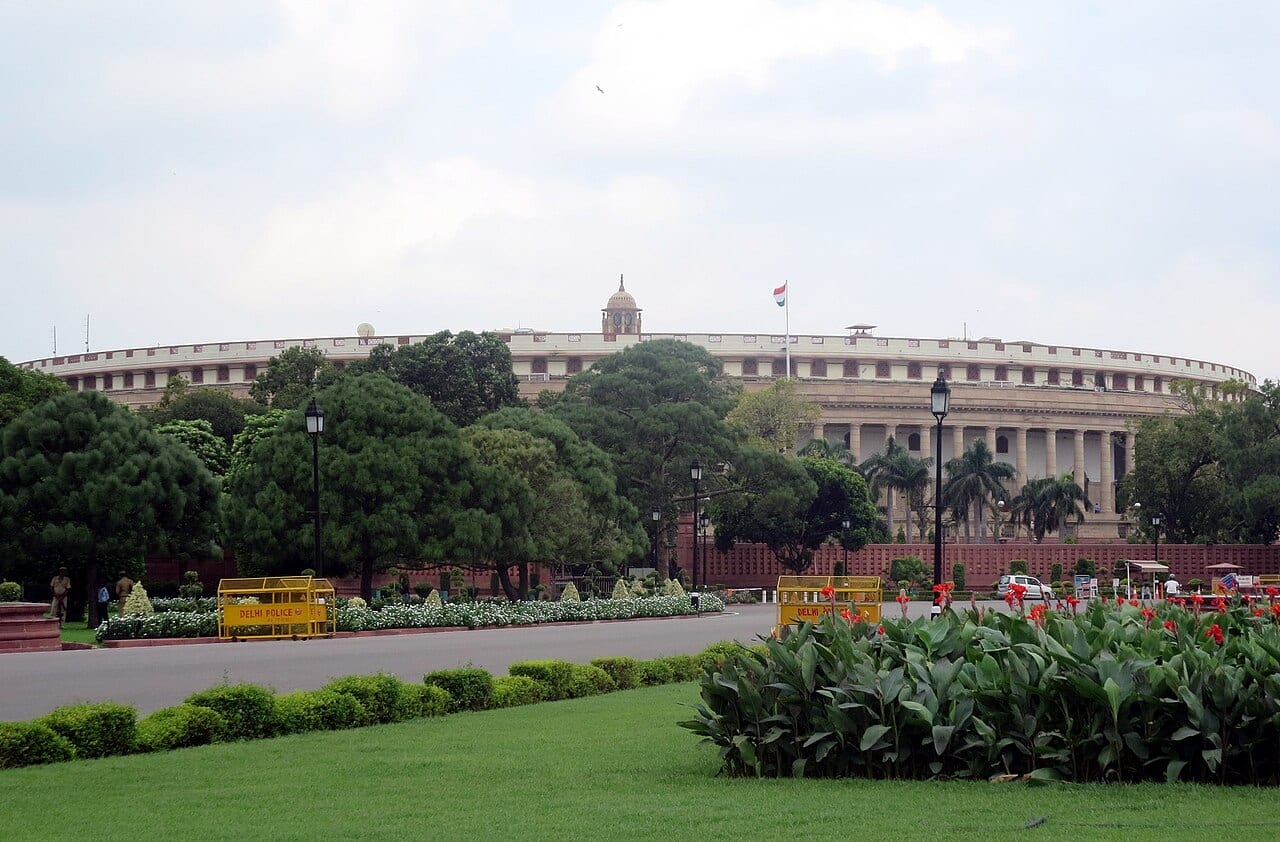
Key points
- PRS Legislative Research puts Lok Sabha productivity at 15% and Rajya Sabha at 33%; the government's figures are 19% and 39%.
- Nine of the 11 Bills the Lok Sabha passed went through with no MP other than the minister speaking, according to PRS.
- Question Hour in the Lok Sabha lasted nine minutes across the whole session, with two questions answered orally.
- The FCRA Amendment Bill went to a Joint Parliamentary Committee, which is due to report in the first week of the Winter Session.
The Lok Sabha functioned for 15% of its scheduled time in the Monsoon Session of 2026, and the Rajya Sabha for 33%, according to PRS Legislative Research. That is the lowest Lok Sabha figure in any session of the current, 18th Lok Sabha for which PRS figures were available to us. The previous low was the Monsoon Session of 2025, at 29%, which PRS then described as “the lowest functioning seen during the 18th Lok Sabha”.
The session ran from 20 July to 13 August 2026, and both Houses met on 19 days. Protests over the NEET-UG 2026 paper leak, and police action against student protesters, took up much of the session. Education Minister Dharmendra Pradhan resigned on 25 July, Outlook reported. Opposition MPs repeatedly sought a discussion on the NEET-UG controversy and a statement from Home Minister Amit Shah, according to the same report.
Monsoon Session 2026 at a glance
- 19sittings in each House, 20 July to 13 August
- 15% / 33%Lok Sabha / Rajya Sabha productivity, share of scheduled time
- 19% / 39%Lok Sabha / Rajya Sabha productivity, government figures
- 9 minQuestion Hour in the Lok Sabha for the whole session
Two sets of numbers
The government’s figures are higher. Parliamentary Affairs Minister Kiren Rijiju put Lok Sabha productivity at 19% and Rajya Sabha productivity at 39%, Outlook reported on 13 August. Rajya Sabha Chairman C.P. Radhakrishnan gave the Upper House figure as 39.17%, or 37 hours and 49 minutes of sitting, according to PTI.
PRS measures the time each House actually worked against the time it was scheduled to sit. The reports we read do not say how the government’s figures are calculated, so this report gives both.
The Bill count differs too. Rijiju said “we passed a total of 12 bills”, and the Rajya Sabha Chairman also counted 12 Bills passed or returned. PRS counts 11, because it leaves out Finance and Appropriation Bills. Twelve Bills were introduced during the session and 11 were passed, PRS says in its August policy review. The one left over, the Indian Statistical Institute Bill, 2026, was later referred to a standing committee.
Laws passed with little debate
Nine of the 11 Bills the Lok Sabha passed went through with no MP other than the minister speaking, PRS found. The Supreme Court (Number of Judges) Amendment Bill took four minutes in the Lok Sabha. The Rajya Sabha spent 2 hours 21 minutes on the same Bill, with 33 MPs speaking.
Only one Bill was debated at length in both Houses. The Public Examinations (Prevention of Unfair Means) Amendment Bill, 2026, which toughens penalties for exam paper leaks, took 10 hours 54 minutes in the Lok Sabha with 48 MPs speaking, and 6 hours 39 minutes in the Rajya Sabha with 35 MPs.
Rijiju acknowledged the gap at the end of the session.
“However, from the perspective of debate and discussion, it was not as successful.”
He also said that this was “not healthy for the parliamentary democracy”, Outlook reported.
Closing the Rajya Sabha, Radhakrishnan said: “As the 271st Session of the Rajya Sabha draws to a close, I reflect on its proceedings with deep concern.” He added that “repeated disruptions ultimately affect the trust and aspirations of the people”, PTI reported.
Questions went unasked
Question Hour ran for 1% of its scheduled time in the Lok Sabha: nine minutes in all, with two questions answered orally. In the Rajya Sabha it ran for 12%, according to PRS. By comparison, in the Winter Session of 2025 the Lok Sabha used 67% of its Question Hour time and the Rajya Sabha 80%.
In the Rajya Sabha, 16 of 285 starred questions were taken up, along with 52 of 380 Zero Hour submissions and 93 of 380 Special Mentions, PTI reported. PRS records no debates, discussions or private members’ business in the Lok Sabha during the session.
What carries over
Lok Sabha referred the Foreign Contribution (Regulation) Amendment Bill, 2026 to a 31-member Joint Parliamentary Committee on 12 August. The committee is due to report by the end of the first week of the Winter Session, ThePrint reported. A joint committee on the Viksit Bharat Shiksha Adhishthan Bill, 2025, the proposed single regulator for higher education, has not presented its report, PRS says.
The 18th Lok Sabha has sent 21% of its Bills to committees so far, against 16% in the 17th, according to PRS. The House has also not elected a Deputy Speaker two years into its term.
Both Houses were adjourned sine die on 13 August. Business Standard reported on 23 August that the session had not been formally prorogued. As of 11 October, no dates for the Winter Session had been announced.
The documents
- Functioning of Parliament during Monsoon Session 2026PRS Legislative Research, 11 October 2026
- Monsoon Session 2026: vital statsPRS Legislative Research, 10 October 2026
- Parliament functioning in Monsoon Session 2025PRS Legislative Research
- Parliament functioning in Winter Session 2025PRS Legislative Research
- Parliament functioning in Budget Session 2026PRS Legislative Research
- Parliament functioning in Budget Session 2025PRS Legislative Research
- Parliament functioning in Winter Session 2024PRS Legislative Research
- Both Houses of Parliament adjourned sine die with passage of 12 bills during Monsoon SessionNews On AIR (Prasar Bharati), 13 August 2026
- PRS Monthly Policy Review, August 2026PRS Legislative Research